
Relocation First: What New Zealand and Australia Do With Good Homes in the Way
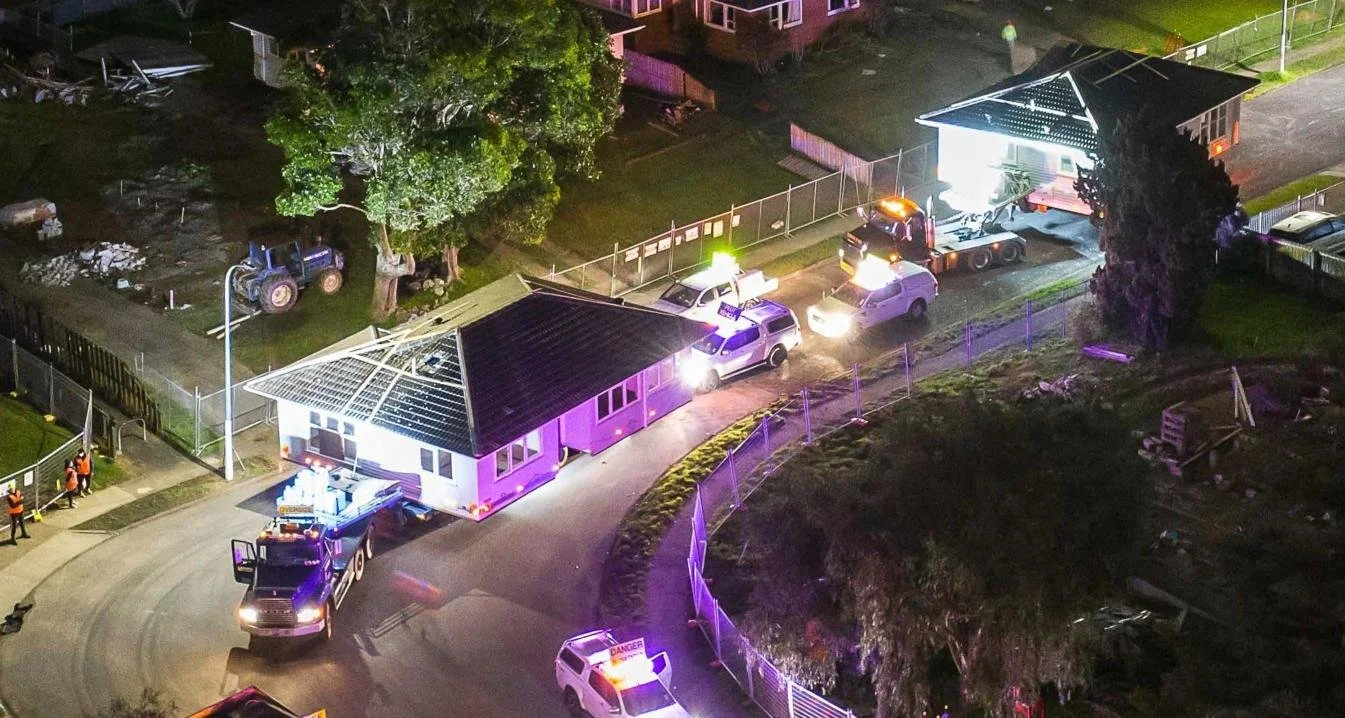
Kāinga Ora state houses on the move overnight in Auckland, relocated rather than demolished to clear land for new homes. Photo: Kāinga Ora – Homes and Communities.
When New Zealand’s state housing agency clears land to build more homes, the first question isn’t when the excavator arrives. It’s whether the houses on the site can be moved. Kāinga Ora’s policy is to relocate at least 10% of the public houses it clears nationally, and it offers those homes to iwi, training groups and community housing providers for NZ$1, with help toward the cost of moving them. Across the Tasman, New South Wales is doing the same with homes it bought back after the 2022 Northern Rivers floods: it auctions them for relocation, some for A$1, and sets aside land to receive them.
At Renewal Development we’ve spent the last few months studying policies across North America, New Zealand and Australia that favour relocation over demolition. Earlier this year we wrote about Auckland’s home relocation industry. This time we looked at the public policy behind it. These two programs stood out for one reason. The owner that controls the most homes slated for removal — government — decided to offer them for relocation first. Here, the same public owners usually call the demolition contractor.
New Zealand: relocation is the first question, not the last
Kāinga Ora says it “prioritises house relocation and deconstruction over demolition, wherever possible.” Demolition is kept for contaminated or fire-damaged houses. Its relocation target has grown from 7% in 2022 to 10% today, and it runs a national panel of relocation, deconstruction and demolition contractors so the work has a supply chain behind it.
Who gets the homes is spelled out in priority order: training and affordable home ownership organisations, Māori, community housing providers, then non-profits. Priority groups pay NZ$1 and get help with transport; private buyers pay market value. The recipient needs land, servicing in place and funds for consent, piles and refurbishment — the same things we plan for on every Renewal Development project.
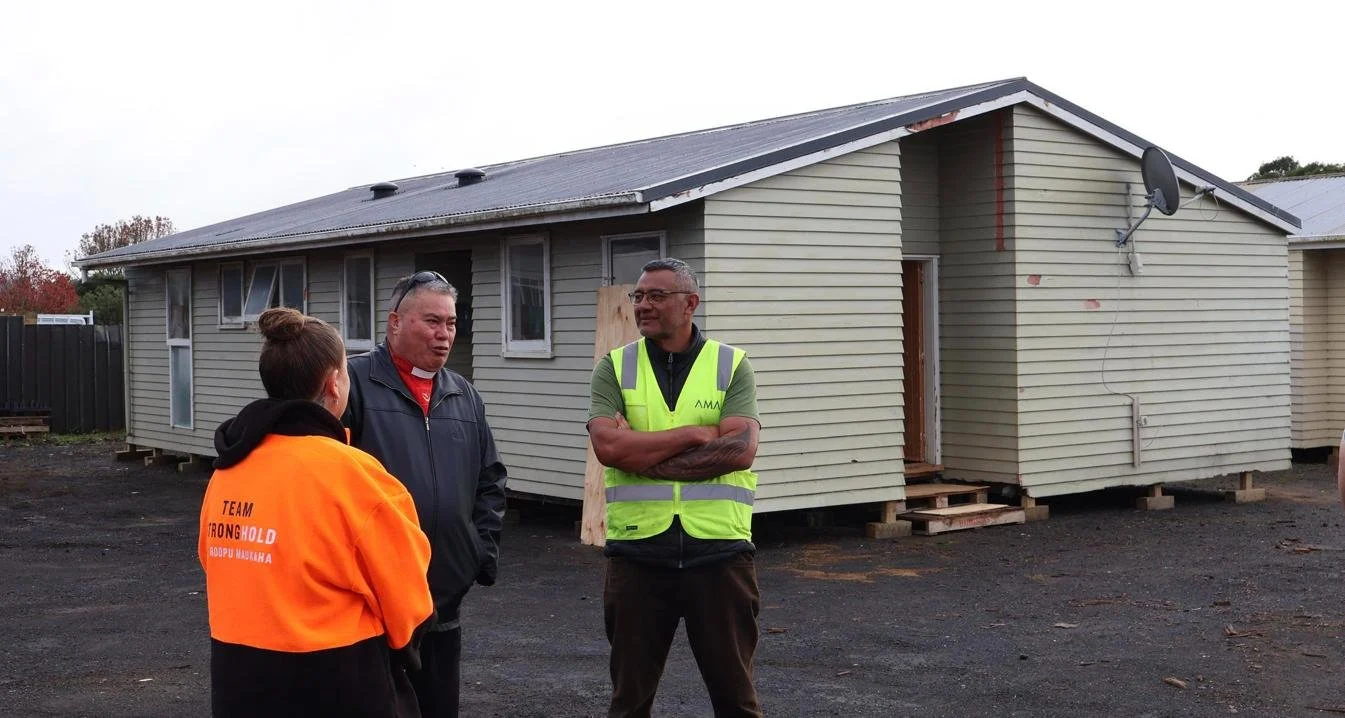
A state house relocated by Kāinga Ora from Māngere to Ama Training Group’s site in Ranui, Auckland, where it’s being renovated for whānau. Photo: Kāinga Ora – Homes and Communities.
The results are real homes. In Māngere, Auckland, three homes went to Ama Training Group, which trains Māori and Pacific whānau and will sell the renovated homes to families who need them, and one went to One Tree Hill College, where more than 60 students renovated it with a licensed builder. In one year alone, 55 homes were moved for home ownership, 40 of them to Māori whānau with land in Northland and Gisborne.
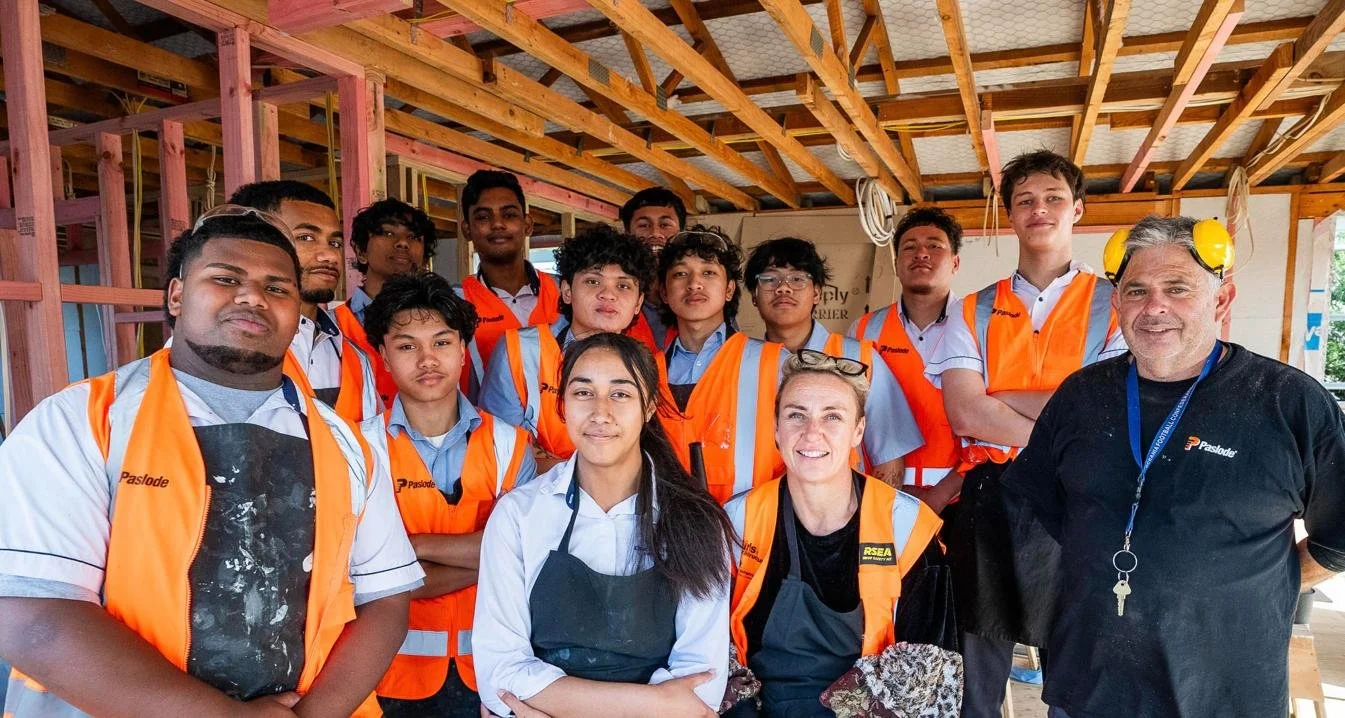
Students and their tutors inside one of the Māngere homes, relocated by Kāinga Ora and renovated as hands-on trades training. Photo: Kāinga Ora – Homes and Communities.
What happens when a target is taken seriously
Kāinga Ora’s Auckland alliance, Piritahi, shows what a target does once a delivery team owns it. Of 503 houses removed from late 2018, 23% were saved for refurbishment and relocation — three times the target. From July 2020 the rate reached 29% against a 7% target, and on one development, Aorere, 34 of 43 houses were relocated.
They also fixed the boring bottleneck that slows every move. Disconnecting power and telecom services was taking eight weeks. A shared live tracking sheet with the utilities cut it to three. Renewal Development knows that problem well from our own moves, and it’s one of the cheapest fixes on the list.
Australia: flood buybacks that give homes a second life
After the 2022 floods, the NSW Reconstruction Authority’s A$880 million Resilient Homes Program began buying back homes in the highest-risk areas of the Northern Rivers. Rather than demolish them, it sells them at public auction for relocation. Prices have ranged from A$1 to A$200,000. Buyers get 11 months to move the home to a site outside the flood zones, and any home that doesn’t sell is assessed for relocation again before demolition is considered.
By August 2026, 160 homes had been sold for relocation and more than 80 owners were moving or giving away their own homes, out of 990 buyback offers. The program also offered more than 100 homes to community organisations — the closest match we’ve found to how Renewal Development brings rescued homes to Nation and non-profit partners — and set aside 19 lots in East Lismore to receive relocated homes. As NSW’s Minister for Recovery, Janelle Saffin, put it: “This program has always been about people, not price.”
What the numbers show
10% — Kāinga Ora’s minimum national relocation target, up from 7% in 2022
NZ$1 — the price for iwi, Māori, training and community housing groups, with help toward transport
Nearly 260 homes relocated by Kāinga Ora over three years to late 2024, with 137,000+ tonnes of waste diverted
79% of homes relocated on Auckland’s Aorere development (34 of 43)
240+ homes sold or moved for relocation through the NSW flood buyback program by August 2026
What this means for BC
In BC, the biggest owners of homes slated for removal are public: ministries, transit agencies, utilities and cities clearing land for roads, transit, schools and new housing. Our Municipal Action Plan already asks cities to put relocation first when they clear their own land. New Zealand and New South Wales show that the same rule can apply to every public owner — with a target, a nominal price for First Nations and non-profits, help with transport, and land set aside to receive the homes.
Renewal Development has shown the receiving end works here. In September our Renewal Team delivered three good homes from Coquitlam to Old Massett on Haida Gwaii, where they’ll become nine units of below-market rental housing in three Renewal Triplexes. These are high-value homes, well renovated and well maintained, with decades of service left in them. Our home rescue, modernize and repurpose model provides housing 20-40% more affordably than new construction or modular. What’s missing is a steady supply — and public owners are best placed to provide it.
Much appreciation to Kāinga Ora, the Piritahi alliance and the NSW Reconstruction Authority for publishing their numbers openly. It makes the case easier for everyone working on this.
If you manage public land with homes slated for removal — a ministry, a Crown agency, a transit authority or a city — or you’re a developer with homes slated for demolition, get in touch. We’d like relocation first to be the ordinary outcome here too. Many more to come.