
An Unexpected Home Relocation Hub: Auckland, New Zealand
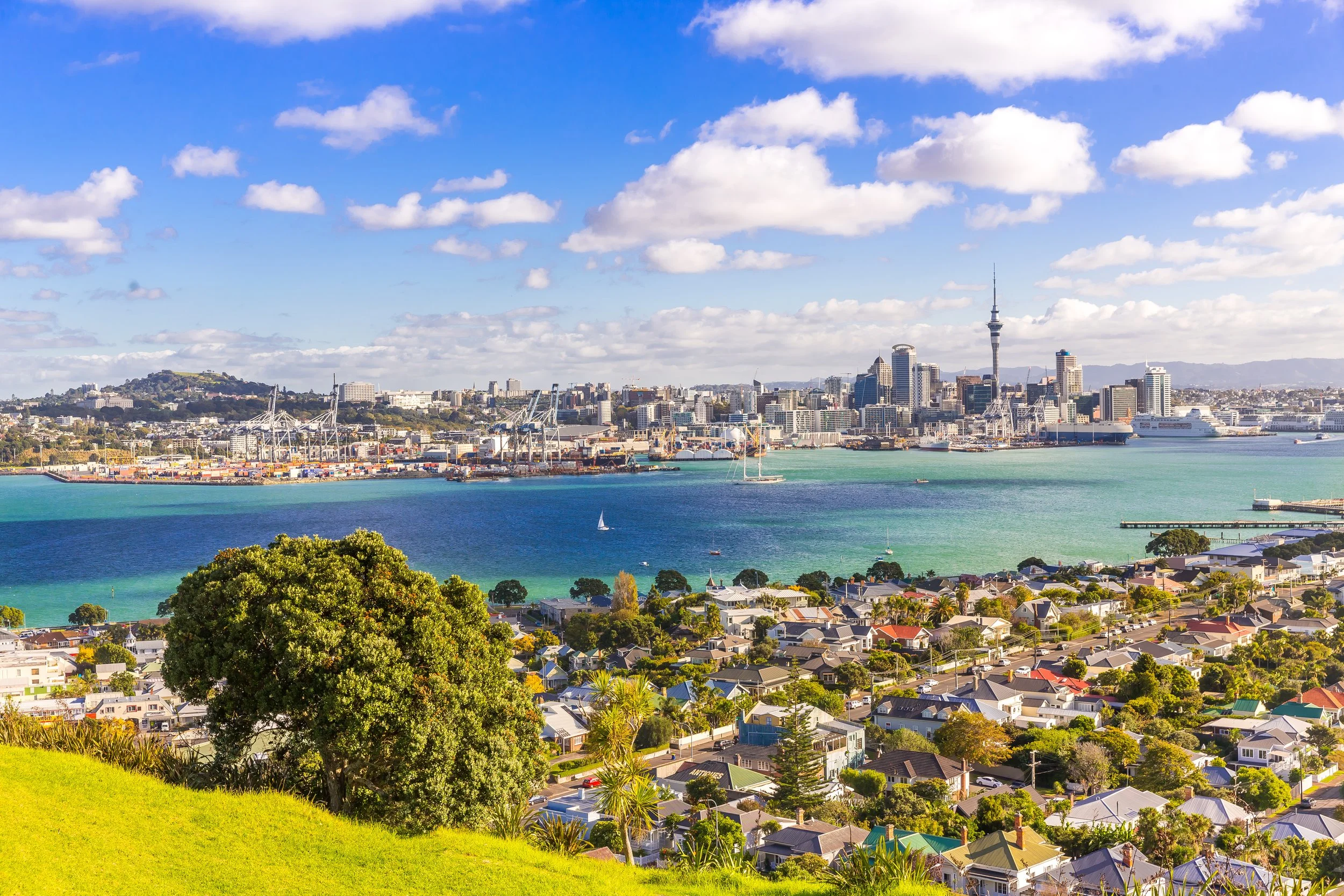
Across much of North America, home relocation is still seen as a niche alternative to demolition. In Auckland, New Zealand, it is an established and normalized part of the development landscape. The city has a mature home relocation and repurposing industry that offers both a proven alternative to demolition and a sustainable, cost-effective alternative to new construction in non-urban areas.
For our team at Renewal Development, operating in Vancouver, Canada, Auckland offers a compelling case study. It is a major urban centre where home relocation is not exceptional - it is embedded in how the city evolves.
Background: Auckland’s Blanket Upzoning Policy
In 2016, Auckland enacted one of the most sweeping blanket upzoning reforms in the world through the Auckland Unitary Plan (AUP). The policy abolished single-family-only zoning across roughly three-quarters of the city’s residential land, allowing townhouses, duplexes, and apartment buildings in areas that had previously permitted only detached houses (One Final Effort).
The motivation was primarily to address a severe housing affordability crisis. Auckland had rapidly rising rents and home prices, driven by population growth and constrained supply. Policymakers sought to expand housing capacity, increase multifamily construction, and slow price escalation by removing restrictive zoning barriers that limited density (UCLA Lewis Center).
By dramatically increasing the amount of land where multi-unit housing was legal, the reform expanded theoretical housing capacity by hundreds of thousands of units and created the conditions for faster housing production.
Auckland’s upzoning significantly accelerated redevelopment - and with it, demolitions. One analysis found the reforms led to more than 20,000 additional homes in five years, while also causing over 7,000 additional demolitions to make way for denser housing (One Final Effort).
British Columbia followed a similar policy direction in 2023 through Bill 44 and related acts (source). Auckland’s experience provides a template for what our region can expect in terms of the projected rate of single-family home demolitions and the supply of homes available for relocation and repurposing.
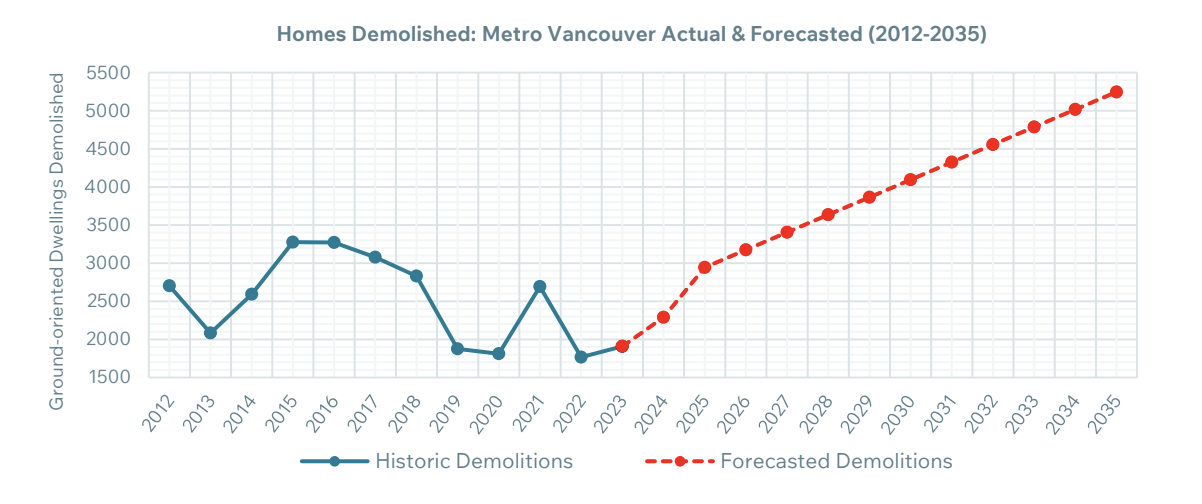
Auckland Council data shows that approximately 2,000–3,000 residential demolition consents (permits) are issued annually in the Auckland region. This is comparable to Metro Vancouver, where an average of 2,700 homes are demolished each year.
Auckland’s World-Leading Home Relocation Industry
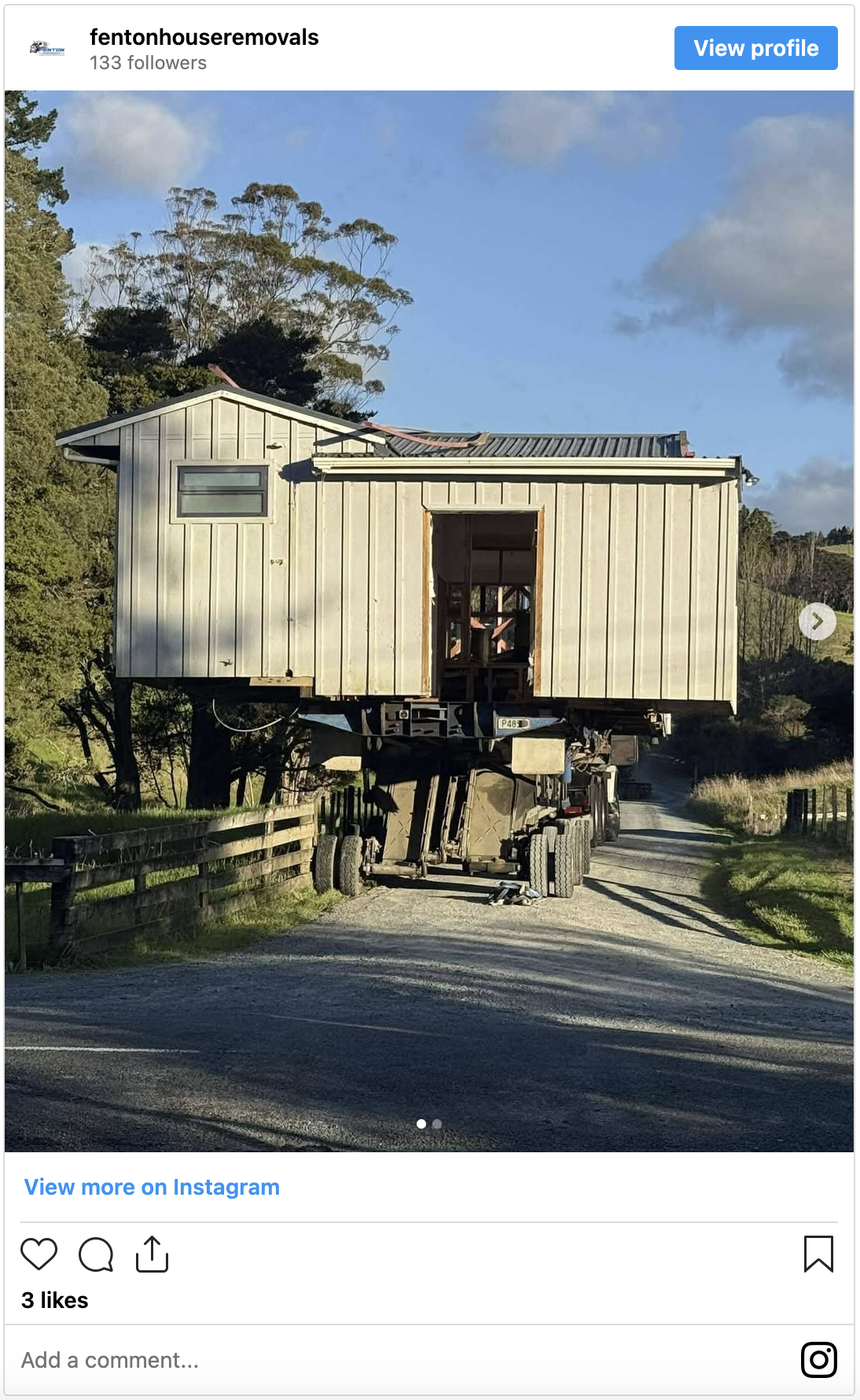
Like most Canadian cities, relocation in Auckland is not limited to heritage buildings or special projects. Entire neighbourhoods of older timber homes are routinely lifted, transported, and reset on new sites, often in rural or growth areas outside the city. Some relocation companies in Auckland individually move 100+ homes per year - volumes rarely seen in North America.
The Auckland region has a well-developed ecosystem of house-moving businesses. Estimates suggest that at least 30 active house relocation companies operate in or service Auckland (source). According to Auckland Council officials, an estimated 500 homes are relocated from the Greater Auckland area to surrounding communities each year.
Several structural and cultural factors contribute to Auckland’s robust home relocation market:
1. Cultural Normalization
In New Zealand, home relocation is normalized and widely seen as practical and cost-effective. Real estate listings routinely advertise “relocatable homes” as standalone assets. The industry has operated at scale for decades, creating public familiarity and market trust.
2. Regulatory Frameworks
Local councils have established standard policy pathways for developers and homeowners that promote relocation. The process is known, predictable, and supported by experienced professionals.
3. Economic Incentives
Relocating and repurposing homes can cost significantly less than new construction globally. For buyers, this means lower upfront building costs, faster build timelines, and reduced exposure to construction inflation.
Here in Vancouver, Canada, a relocated Renewal Home (provided by Renewal Development) is 20–40% more affordable than pre-fab or new construction. The relocation-repurposing model makes particular financial sense in remote communities where new construction is challenged by limited access to products, materials, and skilled labour.
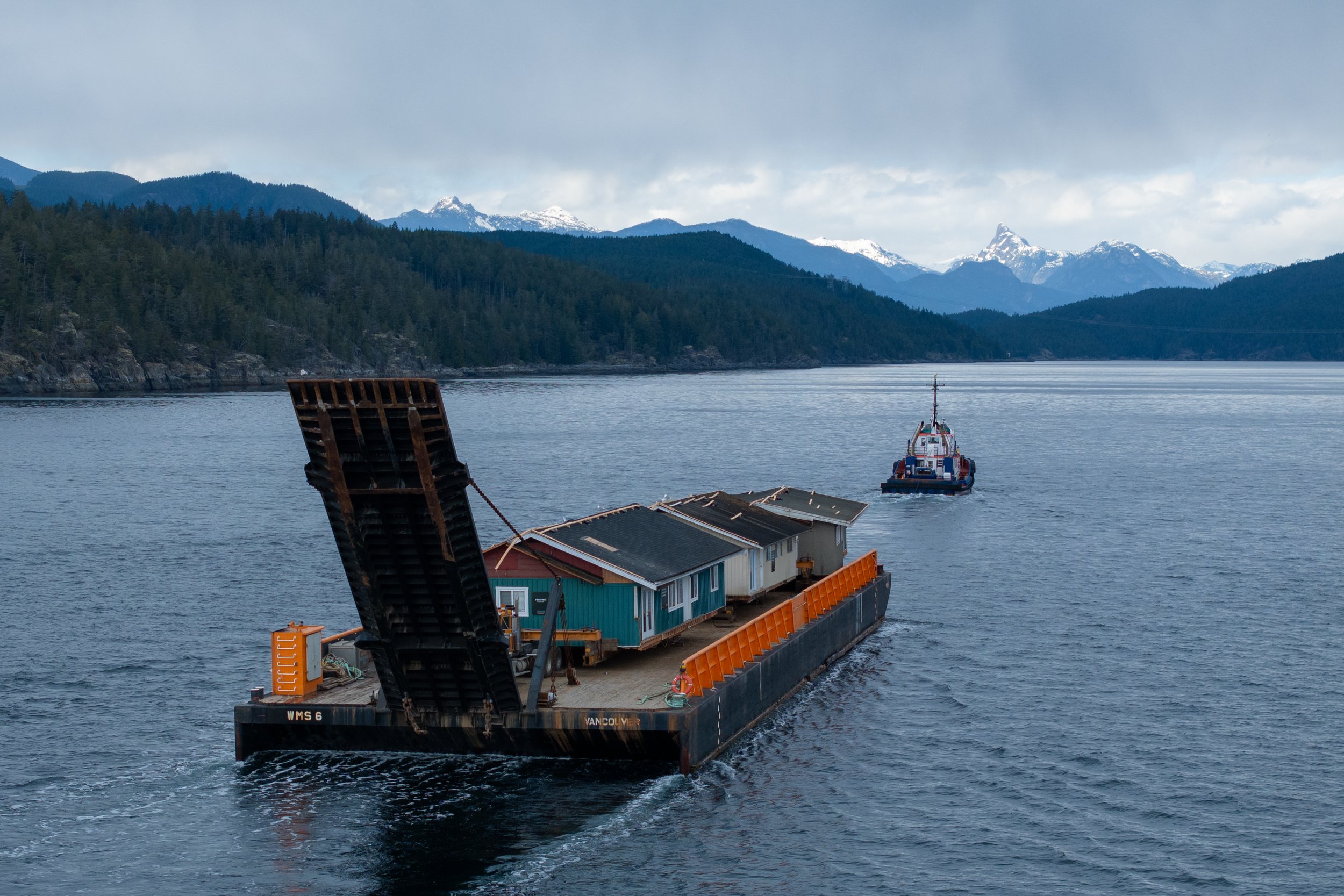
Above: Three homes rescued by Renewal Development are barged from Vancouver mainland to the shíshálh Nation on the Sunshine Coast.
4. Land Availability Outside the Core
Auckland’s surrounding regions provide receiving sites for relocated homes. Rural and peri-urban growth areas can accommodate second-life houses more easily than dense urban neighbourhoods. This geographic dynamic sustains a circular flow of buildings rather than a one-way pipeline to landfill.
Renewal applies a similar approach in coastal British Columbia by identifying viable homes in urban redevelopment areas and relocating them to non-urban communities that need quality housing.
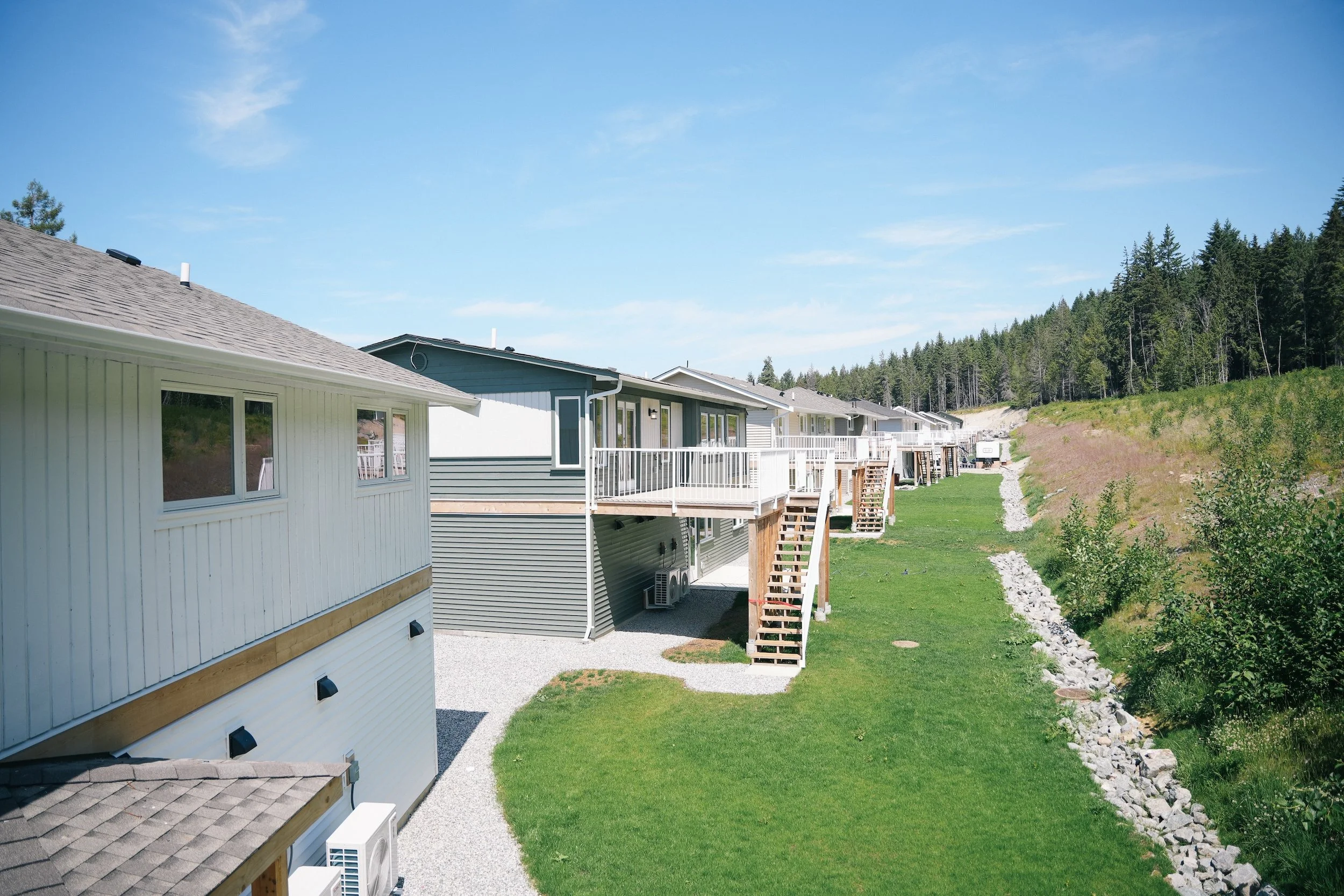
Completed retrofitted Renewal homes at the shíshálh Nation on the Sunshine Coast.
What Does This Mean?
Auckland illustrates that large-scale relocation is possible in a modern, growing city. Its home relocation industry demonstrates success in multiple ways: as a housing affordability strategy, a construction waste diversion tool, a practical response to densification, and a functioning circular economy model in action.
For Renewal, Auckland reinforces a core principle: demolition is not inevitable. With the right ecosystem and policy alignment, home relocation can operate at meaningful scale.
As British Columbia continues to densify, Auckland offers a glimpse of what a mature relocation market could look like.
The question is not whether home relocation and repurposing works.
In Auckland, it already does.