
Homes on the Water: What Newfoundland’s Resettlement Program Teaches Us About Moving Good Homes
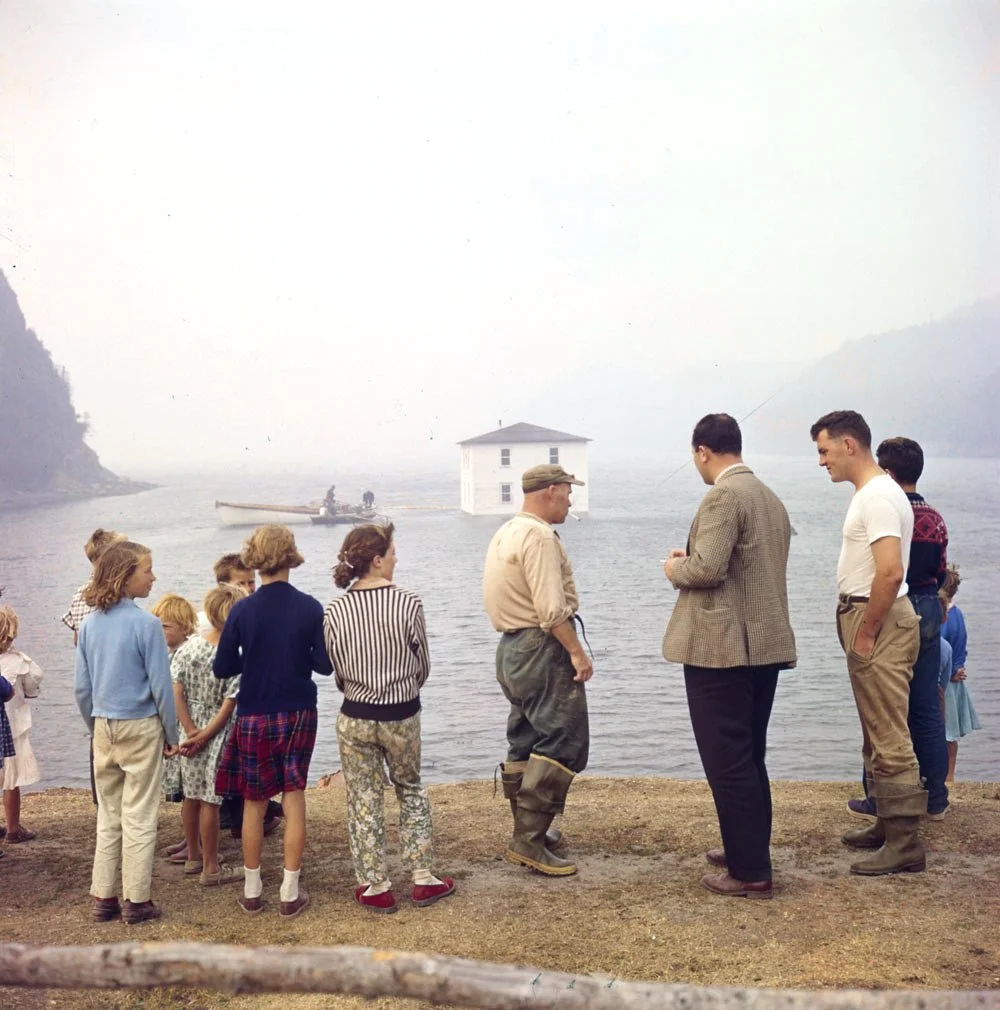
Neighbours watch as a family home is floated from Silver Fox Island to Dover, Bonavista Bay, Newfoundland, in 1961. Photo: B. Brooks, National Film Board of Canada. Library and Archives Canada, e010975948 (CC BY 2.0).
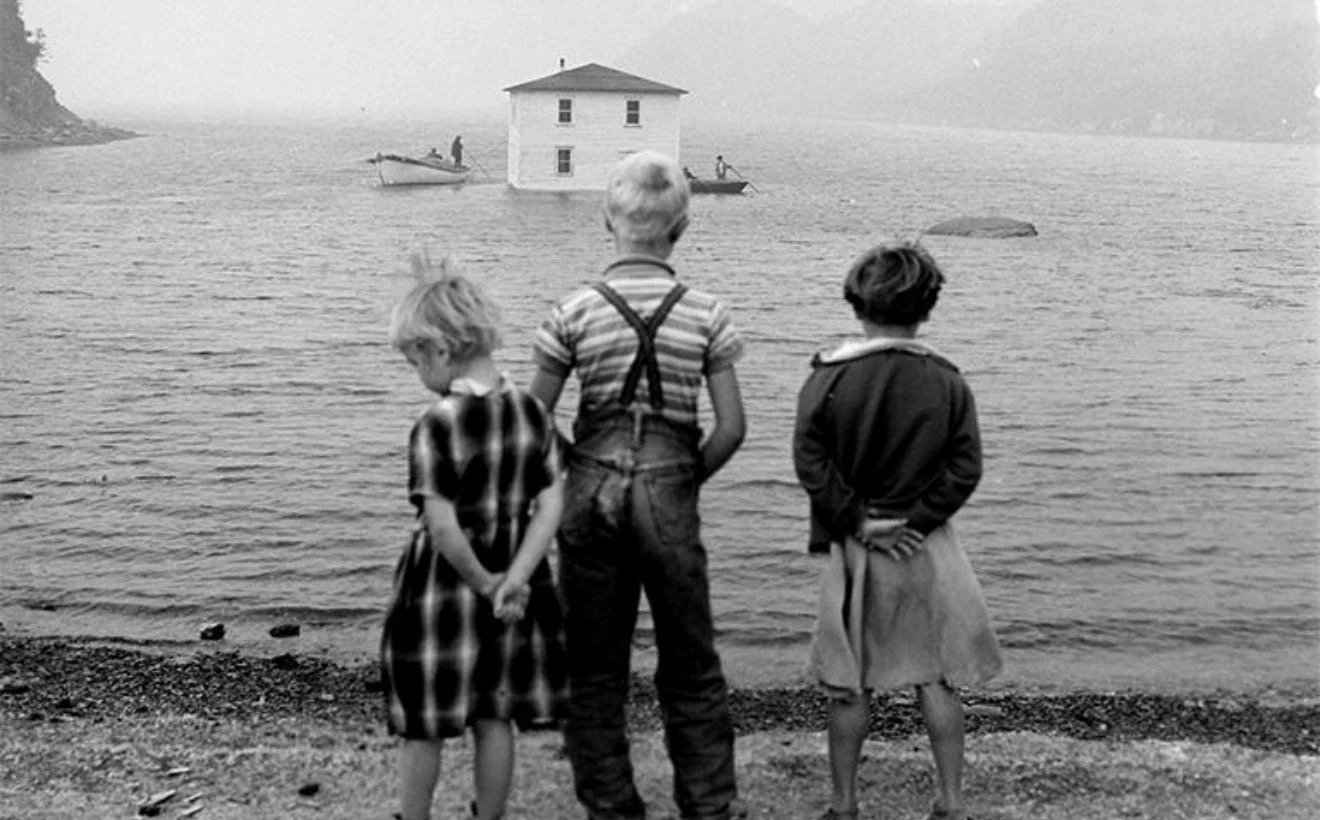
There’s one image everyone in our line of work knows. A plain, square, two-storey house sitting low in the water. A small boat out front. A rope pulled tight. A family looking back at the shore.
It opens Below, the new Newfoundland series on Netflix, and it’s real history. Between 1954 and 1975, government resettlement programs moved nearly 30,000 people out of roughly 300 small outport communities in Newfoundland and Labrador. Many families would not leave their homes behind. They winched them down to the shore and towed them across the water to their new towns.
At Renewal Development we move good homes for a living, so this story means a lot to us. It’s also a tender one, and resettlement is still a sensitive subject for many families in Newfoundland and Labrador. Here’s what happened, and what we think it teaches.
What resettlement was
The first program, Centralization, began in 1954. The province offered families small sums to move from isolated coves to larger, more accessible communities, and a community had to vote unanimously to go. By 1965 it had helped relocate around 115 communities and about 7,500 people.
In 1965 Ottawa joined in. The federal-provincial Fisheries Household Resettlement Program tied assistance to moving to designated “growth centres” — larger towns, usually with a fish plant and heavy government investment. Between 1965 and 1975 roughly 148 more communities were emptied and more than 20,000 people moved, most of them in the first five years.
The stated aim was a better life: schools, hospitals, roads, electricity and steady work that the government said it could not afford to bring to hundreds of tiny harbours.
A complicated legacy
Resettlement brought real gains for many families: better schools, health care, roads and electricity. It also asked a great deal. Leaving a home cove meant leaving fishing grounds, neighbours and a way of life, and not every new town had work waiting. Opinions on the program are still divided, and for many who lived through it, it remains a loss as well as a fresh start.
Relocation still exists in Newfoundland and Labrador today, with one important change: it can only begin when the community itself asks for it.
Why families brought their homes with them
For most outport families, the house was the most valuable thing they owned. Leaving it meant starting over with nothing. So they jacked their homes off their foundations, floated them on barrels or log rafts, and towed them with their own fishing boats — sometimes for many kilometres along the coast. Whole communities turned out to help. One man, Art Wicks, hauled more than 20 houses from Port Nelson to Badger’s Quay.
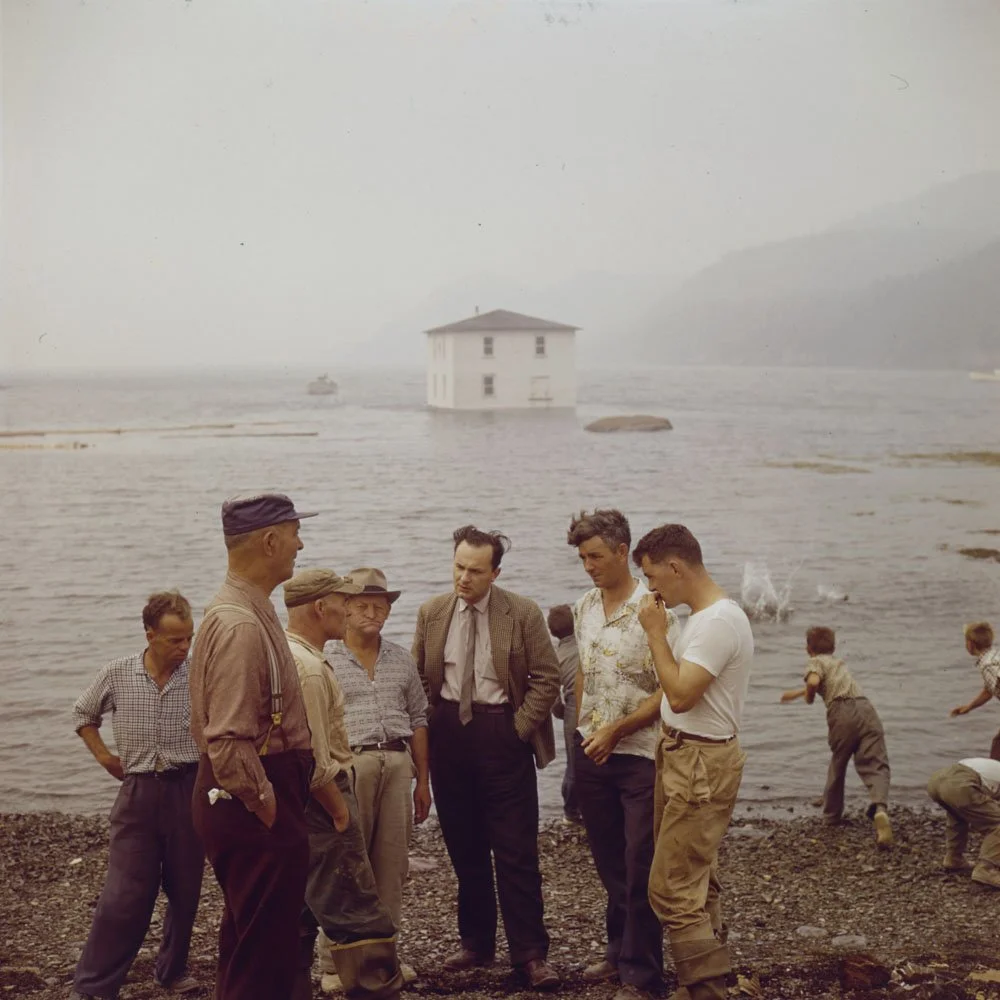
Men gather on the shore at Dover as the house from Silver Fox Island is floated across Bonavista Bay in 1961. Photo: B. Brooks, National Film Board of Canada. Library and Archives Canada, e010975945 (CC BY 2.0).
Those families understood something that still holds true. A well-built home is a high-value asset, worth far more than the cost of moving it. And it carries more than money: the same floors, the same rooms, the same kitchen table, with a new view out the window.
What the numbers show
~30,000 people resettled, 1954–1975
~300 communities relocated
115 communities and ~7,500 people under Centralization, 1954–1965
148 communities and 20,000+ people under the federal-provincial program, 1965–1975
77 larger communities designated as “growth centres” to welcome families
What it means for our work today
Renewal Development’s work runs in the opposite direction. Resettlement moved people out of small communities and into the centres. We rescue good homes from growing urban areas, where they would otherwise be demolished, and move them to non-urban communities that need housing — so people can stay where they belong.
And the community leads. One lesson from resettlement stays with us: the best outcomes come when a community makes its own decisions. In every project we do with a First Nation, the Nation directs, and Renewal Development leads delivery.
Last month our Renewal Team moved three high-value Coquitlam homes by road and then by barge, about 813 km up the coast to Old Massett on Haida Gwaii, at the request of Old Massett Village Council. Each will become a triplex, creating nine units of below-market rental housing on reserve. The method would look familiar to an outport family in 1968. The direction, and who decides, would not.
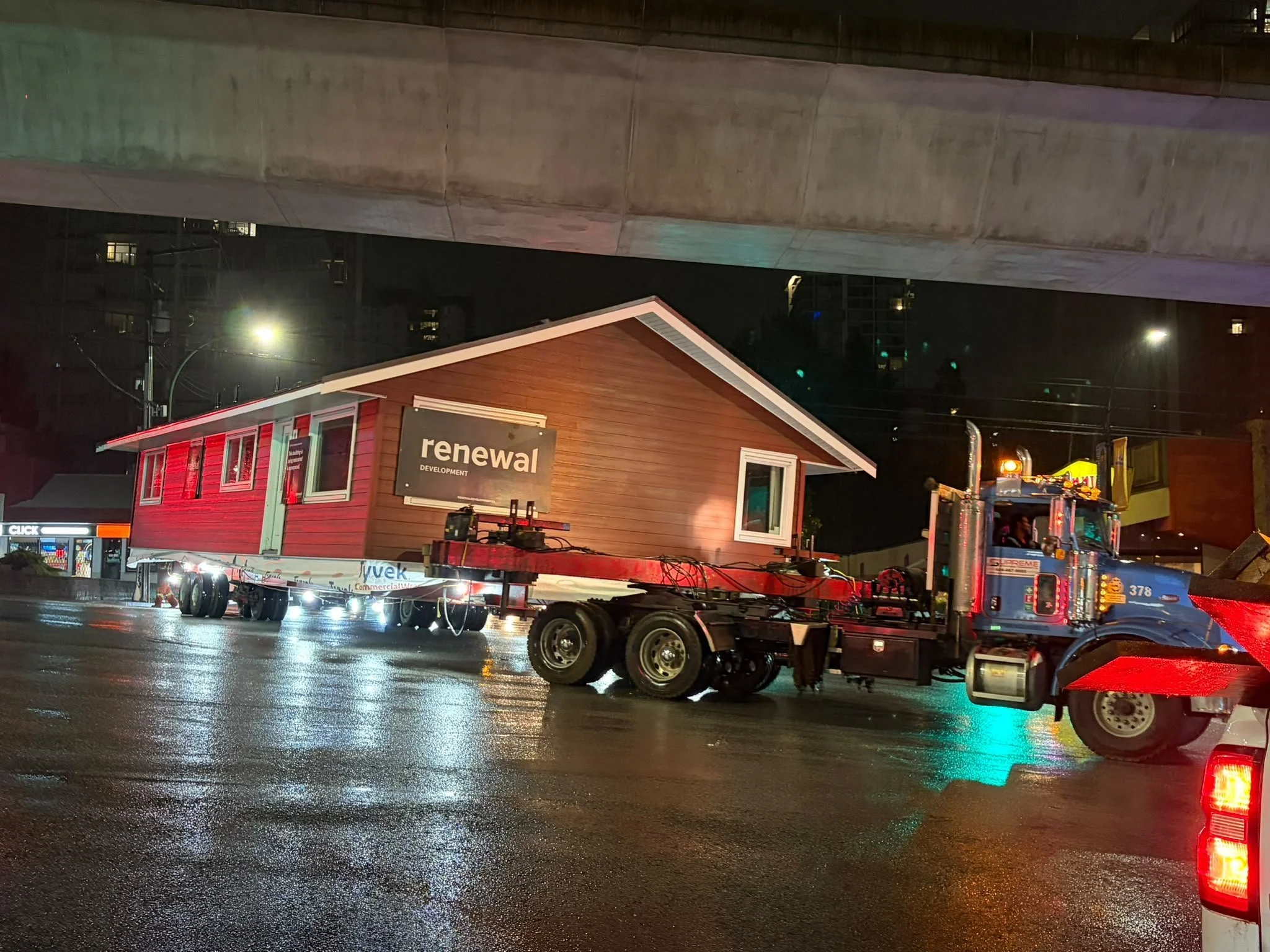
One of the rescued Coquitlam homes on the move overnight in September 2026, on its way to the barge and Old Massett, Haida Gwaii.
Much appreciation to the Maritime History Archive at Memorial University of Newfoundland, Library and Archives Canada, the National Film Board and Heritage NL for keeping this history, and to the families of Newfoundland and Labrador whose photos and stories still tell it best.
If you’re a developer with good homes slated for demolition, or a community looking for housing delivered faster and for less, get in touch. We’d like moving a good home to be the ordinary outcome, not the exception. Many more to come.