
Recognized at the 2026 Land Awards: The shíshálh Nation 10 Home Rescue Project
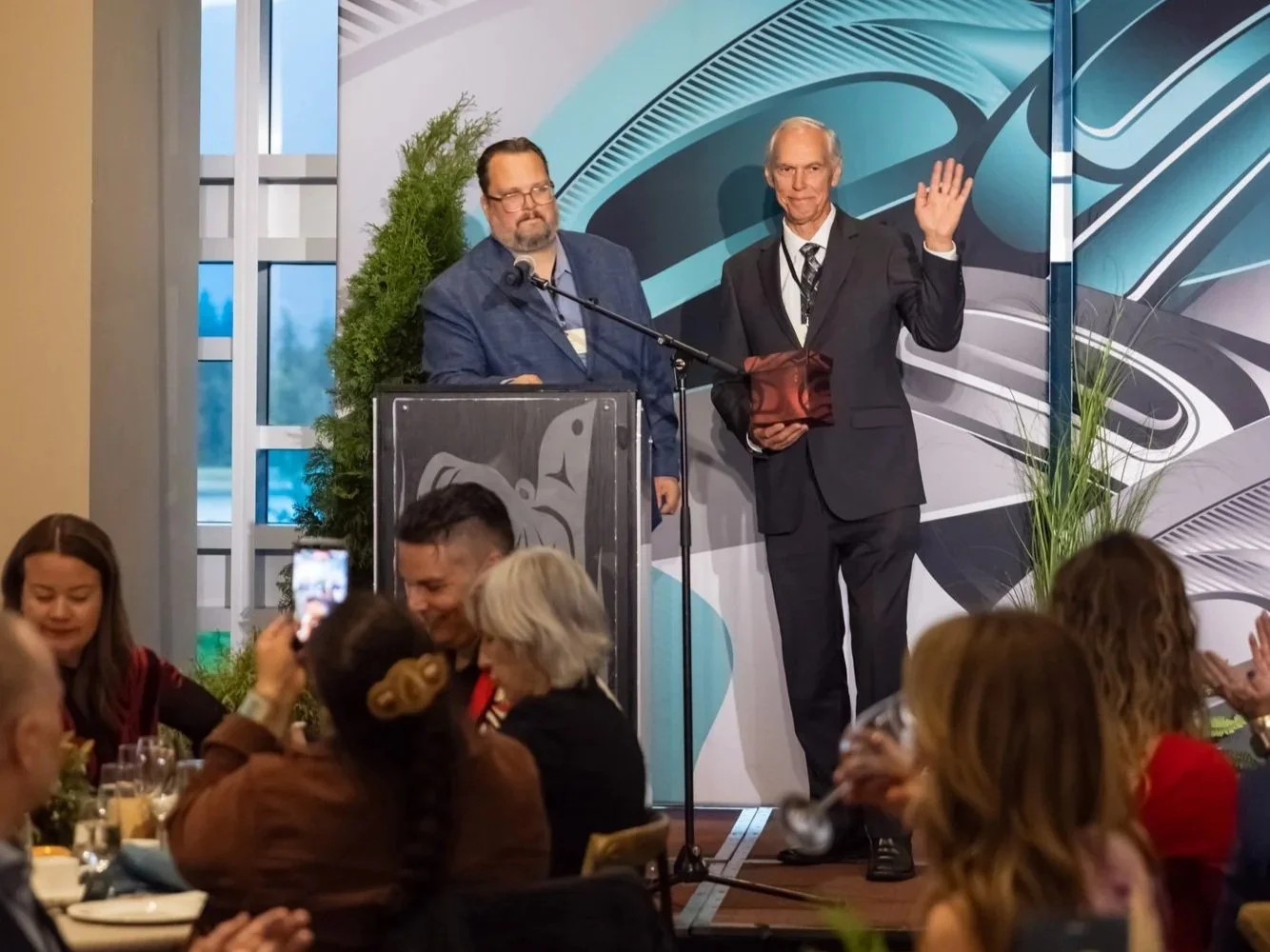
Trevor Lewis and Dave Ewen with Renewal Development accepting the 2026 Land Award for Built Environments at the Coast Coal Harbour Hotel in Vancouver.
On June 4, at the Coast Coal Harbour Hotel in Vancouver, the Real Estate Foundation of BC named the shíshálh Nation 10 Home Rescue Project the winner of the 2026 Land Award for Built Environments. The project moved ten homes off a Port Moody redevelopment site by truck and barge and gave them a second life on shíshálh Nation lands in Sechelt, where they now provide 17 affordable rental units. Renewal Development was the project lead, taking it from first concept through general contracting.
Awards are never the point of the work. But this one matters, because of what it signals. Relocating and repurposing high-value homes — houses that are well renovated, well maintained and worth far more than their scrap value — is no longer a curiosity at the margins of the development industry. A jury of 28 land use, real estate and community leaders looked at what is possible in British Columbia right now and put it at the front.
What the Land Awards recognize
The Real Estate Foundation of BC established the Land Awards in 2010 to celebrate big ideas and bold leadership in sustainable, equitable and socially just land use across the province. They are presented every two years. In 2026, seven people and projects were recognized across categories ranging from Land Champion to Fresh Water to Food Sovereignty, chosen by 28 judges and announced in front of 240 guests.
The Built Environments category recognizes projects that raise the bar for sustainability, equity and social justice in land use and real estate. The shíshálh Nation 10 Home Rescue Project was selected alongside three other finalists: Reciprocity Trusts from the Reciprocity Trusts Society, The Valley’s Plan from Squamish Nation, and Seeding Stewardship from the City of Vancouver and the Vancouver Board of Parks and Recreation.
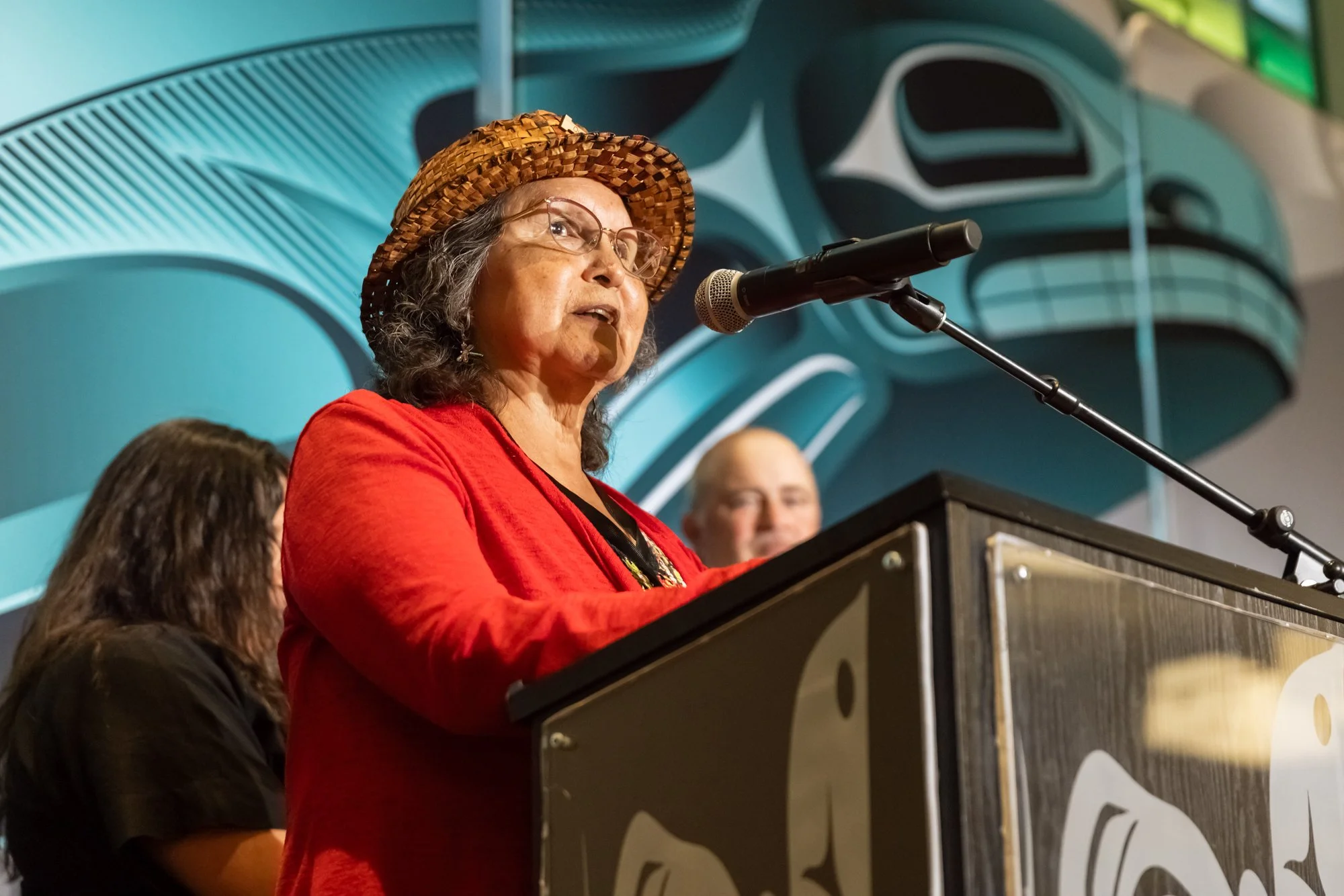
Remarks from the stage at the 2026 Land Awards, where seven people and projects were recognized in front of 240 guests.
Ten homes, two communities
The opportunity surfaced in spring 2023. Wesgroup Properties was preparing to redevelop Coronation Park in Port Moody, and the existing homes on the site were scheduled for demolition. They were not derelict. They were high-value homes — well renovated, well maintained and structurally sound — with decades of service left in them. Renewal Development saw what was about to be thrown away and brought forward a plan to move them instead.
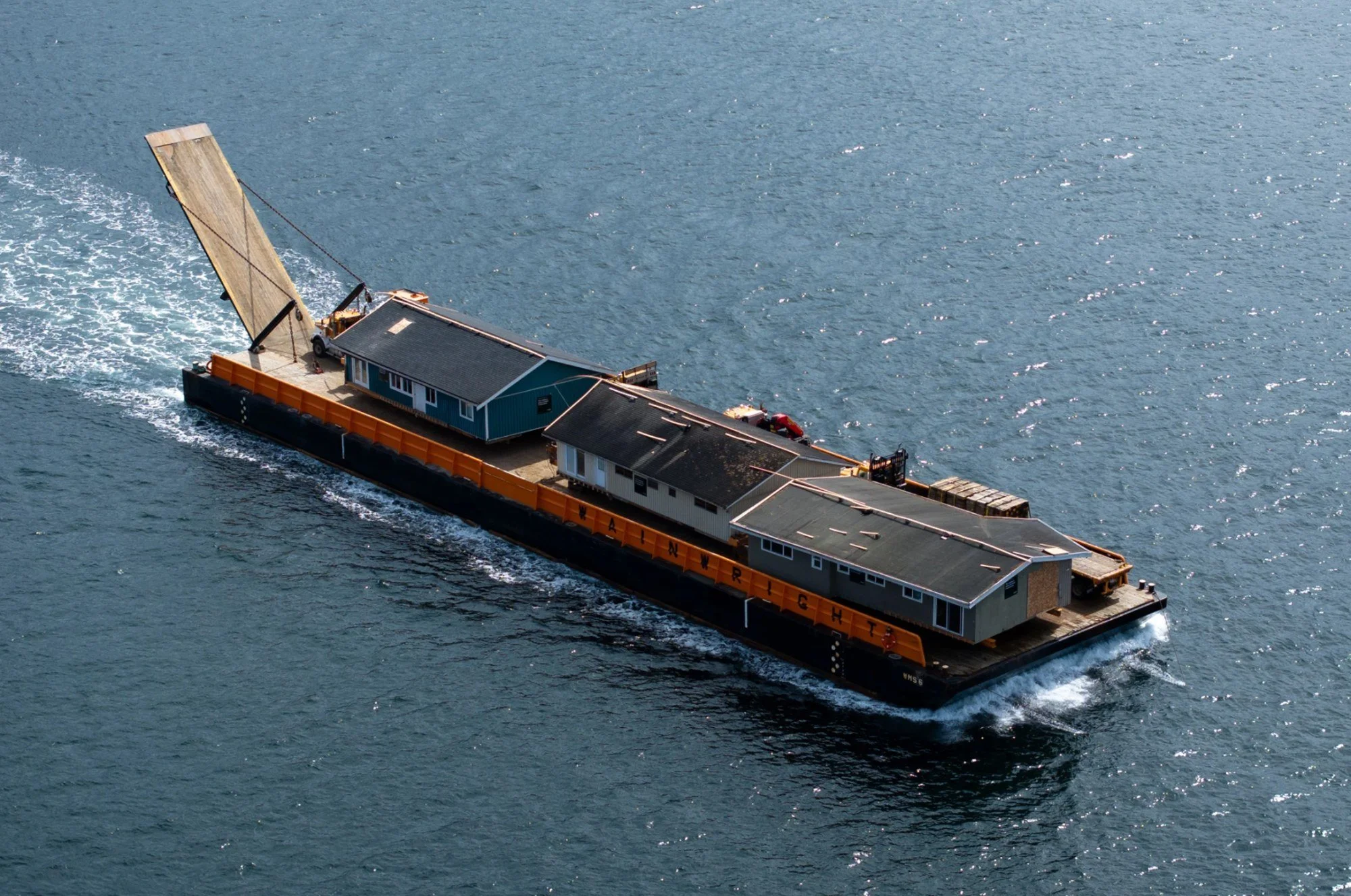
Homes from Coronation Park crossing the Strait of Georgia by barge, bound for shíshálh Nation lands in Sechelt.
Under the direction of Chief and Council, shíshálh Nation entered into an agreement with Wesgroup to acquire the homes and put them to work as affordable rental housing. Wesgroup redirected roughly $35,000 per home from its demolition budget to help offset the cost of moving them instead. Renewal Development was the project lead. We envisioned the project and general contracted it from start to finish — lifting the homes, trucking them out of Port Moody, barging them up the coast, setting them on new foundations in Sechelt and delivering the retrofits — working alongside shíshálh Nation trades and contractors and a wide group of partners.
With secondary suites added during the retrofit, ten houses became 17 homes. The project was completed in December 2025, and the Nation held a ribbon-cutting in February 2026.
What the numbers show
The environmental case for relocation is usually made in the abstract. This project made it concrete:
Roughly 1,000,000 kg of construction material diverted from landfill
Approximately 230 tonnes of embodied carbon preserved
70-80% of lifecycle emissions retained compared with building new
Projected carbon reductions of up to 24% over a 60-year building life
The social case is just as measurable. Rents sit 20-40% below market, and more than 70% of the trades workforce Renewal Development engaged on the project came from shíshálh Nation, keeping both the housing and the wages in the community.
Why this project
The award citation points to the conditions that made it work: transformative housing outcomes become possible when First Nations direct development, when developers are open to inventive solutions, and when practitioners can coordinate genuinely complex logistics.
The order of those three matters. This was not a relocation project that a Nation was invited to participate in. It was a housing project the Nation directed, using relocation as the means. As the Foundation put it, the result is “a powerful example of collaboration, creativity, and Indigenous-led solutions in action.”
The logistics Renewal Development took on were not trivial either. Moving a single house across a municipal boundary is difficult. Moving ten of them onto a barge, up the Strait of Georgia and onto prepared foundations on the Sunshine Coast requires permits, engineering, marine scheduling, utility coordination and a tolerance for weather. Every one of those steps is a place where a project like this usually stalls.
What it changes
Every year in British Columbia, thousands of high-value homes — well renovated, well maintained, with decades of life left in them — are demolished because relocating them looks harder than knocking them down. Usually that is a failure of precedent rather than a failure of engineering. Nobody has done it here, so nobody does it here.
That is what this recognition is useful for. There is now a completed, awarded, publicly documented example of ten homes leaving a redevelopment site intact and arriving as affordable housing in a community that needed it, with the carbon, the material and the wages accounted for. The next developer facing a demolition budget has somewhere to point, and in Renewal Development, a project lead that has already taken one from concept to completion.
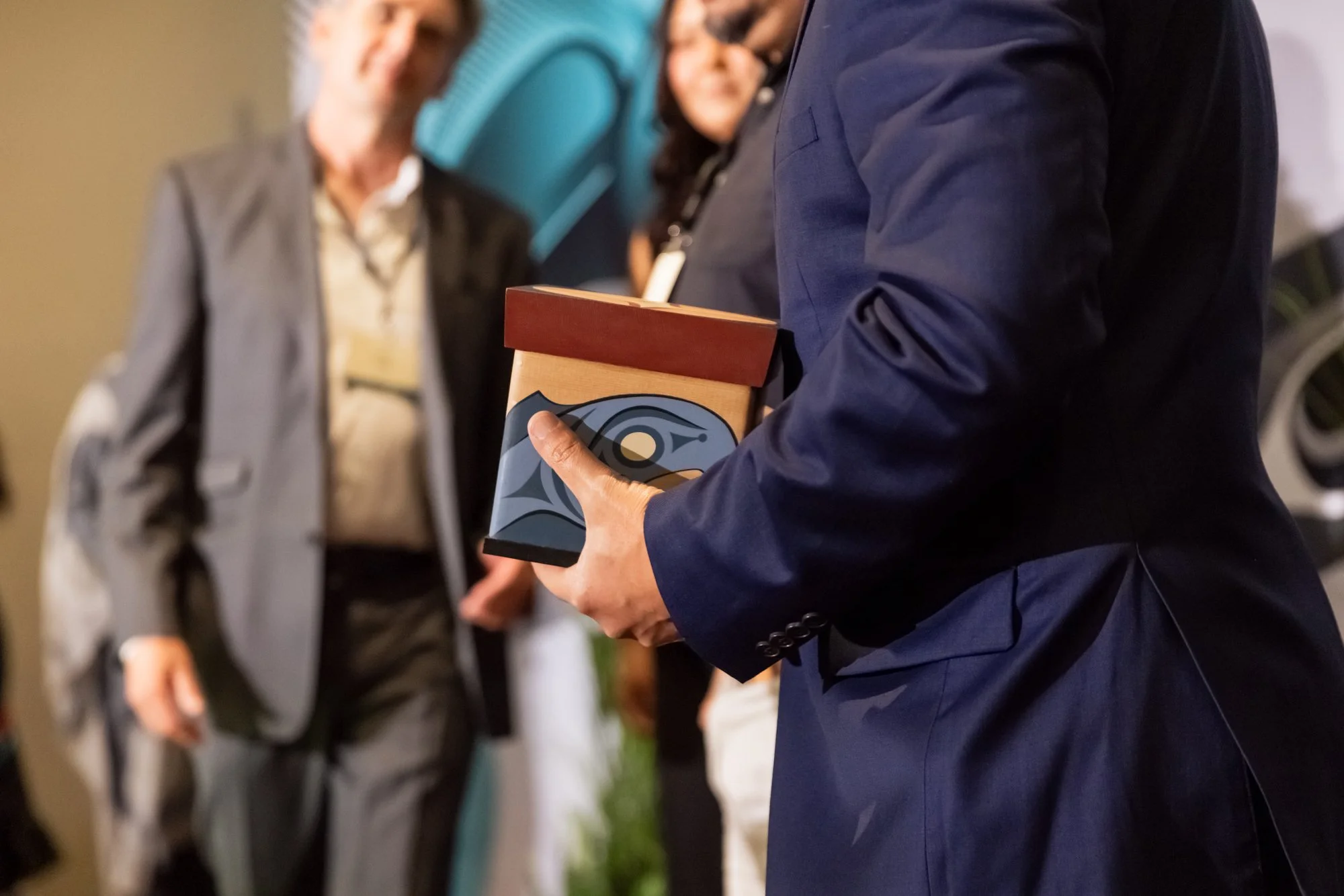
The 2026 Land Award for Built Environments, presented on June 4 in Vancouver.
We are grateful to the Real Estate Foundation of BC for the recognition, to shíshálh Nation for the leadership, to the many shíshálh Nation trades and contractors who built it alongside us, and to Wesgroup Properties for being willing to try something other than the default.
If you’re a developer with homes slated for demolition, or a community looking for housing that can be delivered faster and for less, get in touch. We’d like to make this the ordinary outcome rather than the award-winning one.