
A Second Life for Canada’s Homes: Home Relocation Tested Across Seven Canadian Cities
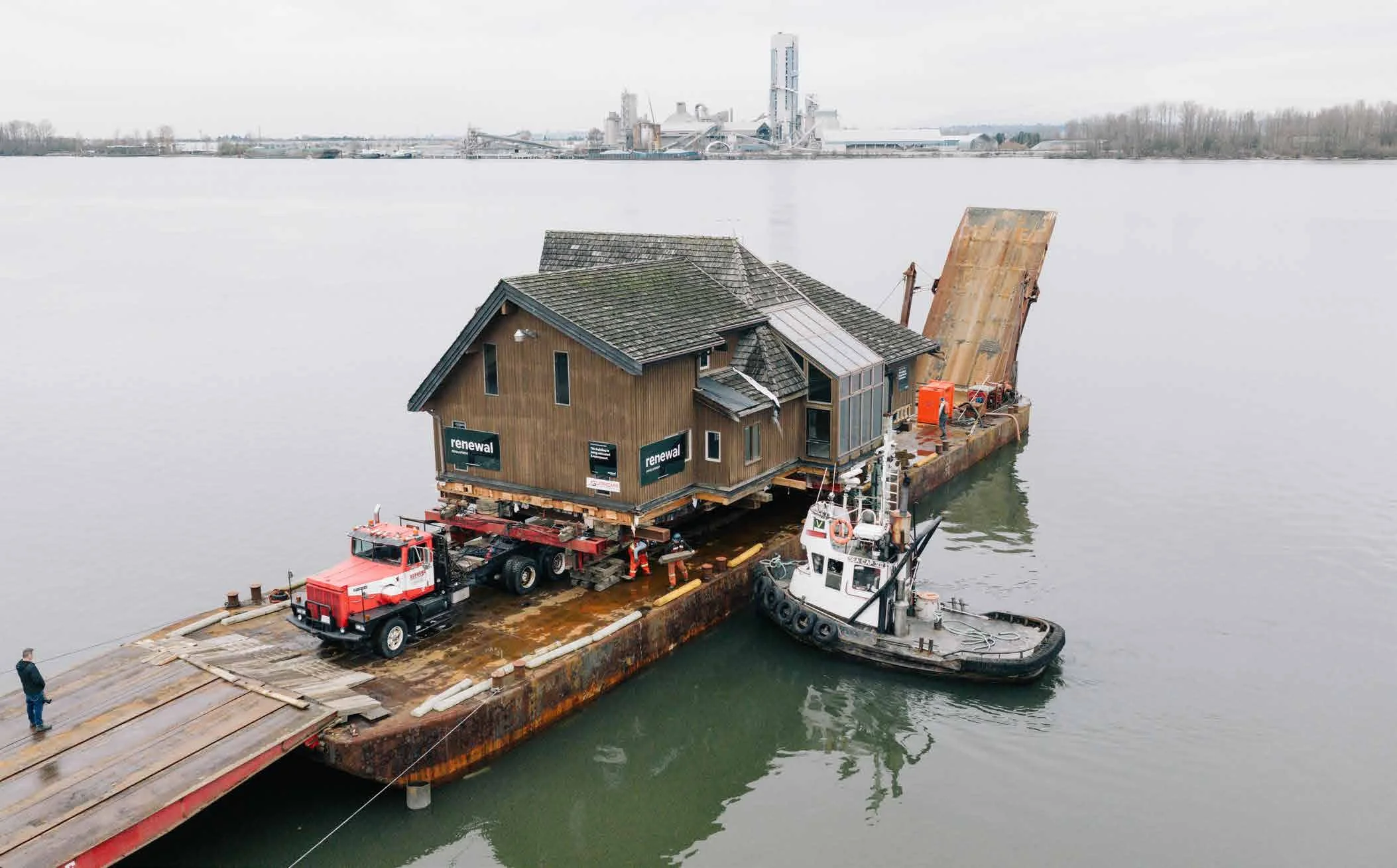
A rescued home leaving Delta by barge for ʼNa̱mǥis Nation in 2025 — one of the four projects of ours the study draws on.
In May, Light House Sustainability Society published A Second Life for Canada’s Homes, a study funded by the Government of Canada through the Research and Knowledge Initiative, and one we partnered on. The study asks a direct question. Renewal Development’s model — rescue, modernize, relocate and repurpose — takes high-value homes slated for demolition in British Columbia and turns them into housing for communities in need. Can it work as an affordable, scalable housing strategy in Canada’s largest cities? The study looked at seven of them: Victoria, Vancouver, Calgary, Edmonton, Hamilton, Toronto and Ottawa. The answer is a qualified yes. The model is technically feasible in all seven, it delivers housing faster and for less than building new, and what holds it back is mover capacity, permits and policy rather than anything about the homes themselves.
This is the first time anyone has tested the idea at a national scale. Light House put our model up against a decade of demolition forecasts, First Nations housing data, builders’ quotes and interviews with the people who physically move houses in each market.
Renewal’s role in the study
When Light House set out to test whether home relocation could work as a housing strategy across the country, it needed a model with a track record, and it chose ours. Our Home Relocation and Repurposing Program follows the same path on every project: identify high-value homes slated for demolition — homes that are well renovated, well maintained — remove them responsibly, transport them to non-urban communities with urgent housing needs, and repurpose them for long-term occupancy.
Four projects we have delivered since 2021 with the shíshálh Nation, Sts’ailes Nation, ʼNa̱mǥis Nation and Squamish Nation became the study’s case studies. The Renewal Standard, the specification we retrofit every home to, became the benchmark the builders priced against, and our real project costs set the relocation side of that comparison. Our experience assessing homes across Metro Vancouver shaped the estimate of how many demolition-bound homes are good enough, and moveable enough, to rescue.
From there, the researchers looked at five things in each city: the supply of homes, the demand from nearby First Nations, the practicality of moving a house through a dense city, the cost against modular and stick-frame construction, and the policy environment. What follows is what the report found.
The supply of homes, and the need for them
On supply, the report forecasts that roughly 90,000 single-family homes will be demolished across the seven cities between 2026 and 2035 — about 9,000 a year, or nearly 25 every day. House movers in every region told the researchers that as many as half of those are good-quality homes. Once the practicalities of moving a house through a city are accounted for, the report settles on a conservative 20%, a figure informed by our own assessment experience. On that basis, Vancouver and Toronto are the strongest and most sustained sources of homes, with Edmonton close behind. Each has supply well beyond the 11 homes a year the report estimates a relocation operation needs to break even. Calgary, Ottawa and Victoria are viable but more limited. Hamilton is the weakest on its own.
On demand, the Assembly of First Nations puts the national need at 108,803 new homes, including 23,670 in British Columbia, 24,194 in Alberta and 20,833 in Ontario. Within 100 km of the seven cities — the distance the report treats as cost-effective by truck — it estimates a need of 6,420 units near Vancouver, 5,825 near Edmonton and 4,085 near Victoria. Near every city except Toronto, the projected need exceeds the number of homes that could be relocated over the next five years. The homes and the need for them are in the same places.
The report is also clear about who decides, and its position matches ours. Demand is not a unit count. It is a Nation-led assessment of housing form, cultural fit, land, servicing, financing and governance. The study was designed around OCAP® principles, treated First Nations housing data as belonging to the Nations, and interviewed Nation housing representatives directly rather than inferring what any community wants. The Nation directs. Relocation is the means.
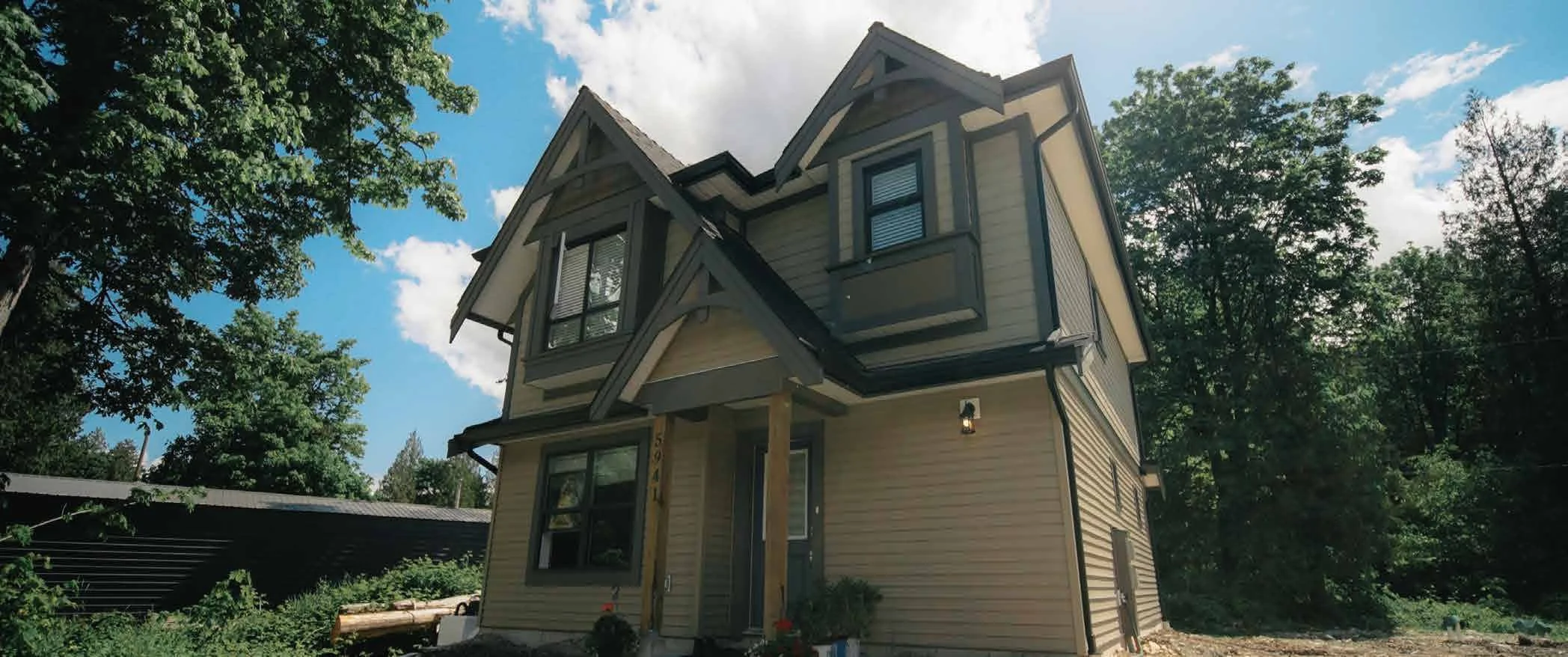
A relocated and renovated home on Sts’ailes Nation lands — four homes built in 2016 left a Coquitlam site in 2024 and now house Nation families.
What the numbers show
Our position going into the study was this: relocated and repurposed homes are 20-30% more cost-effective than new construction or modular housing, comparing like for like — the same specification, the same finish, the same delivered home — and the margin is widest in remote and coastal communities, where the cost of building new climbs fastest. That is what our completed projects have shown. The study set out to test it. The numbers, from the report and from our own projects:
90,000 single-family homes forecast for demolition across the seven cities between 2026 and 2035
20% of them estimated to be good enough, and moveable enough, to relocate
20-30% more cost-effective than new construction or modular housing, like for like, on our completed projects — widest in remote communities
6-12 months from securing a home to occupancy, against the CMHC average of 11.3 months from foundation to occupancy for new construction
49 tonnes of building materials and at least 23 tonnes of embodied carbon in an average 1,300 sq ft wood-frame bungalow, preserved rather than landfilled
The report’s own cost model is deliberately conservative. It assumes a receiving site 100 km from Vancouver, before any remote-community advantage is counted, and it still lands relocation at 19.8% below stick-frame construction. Multi-home moves, standardized retrofit scopes and barge transport all widen that margin.
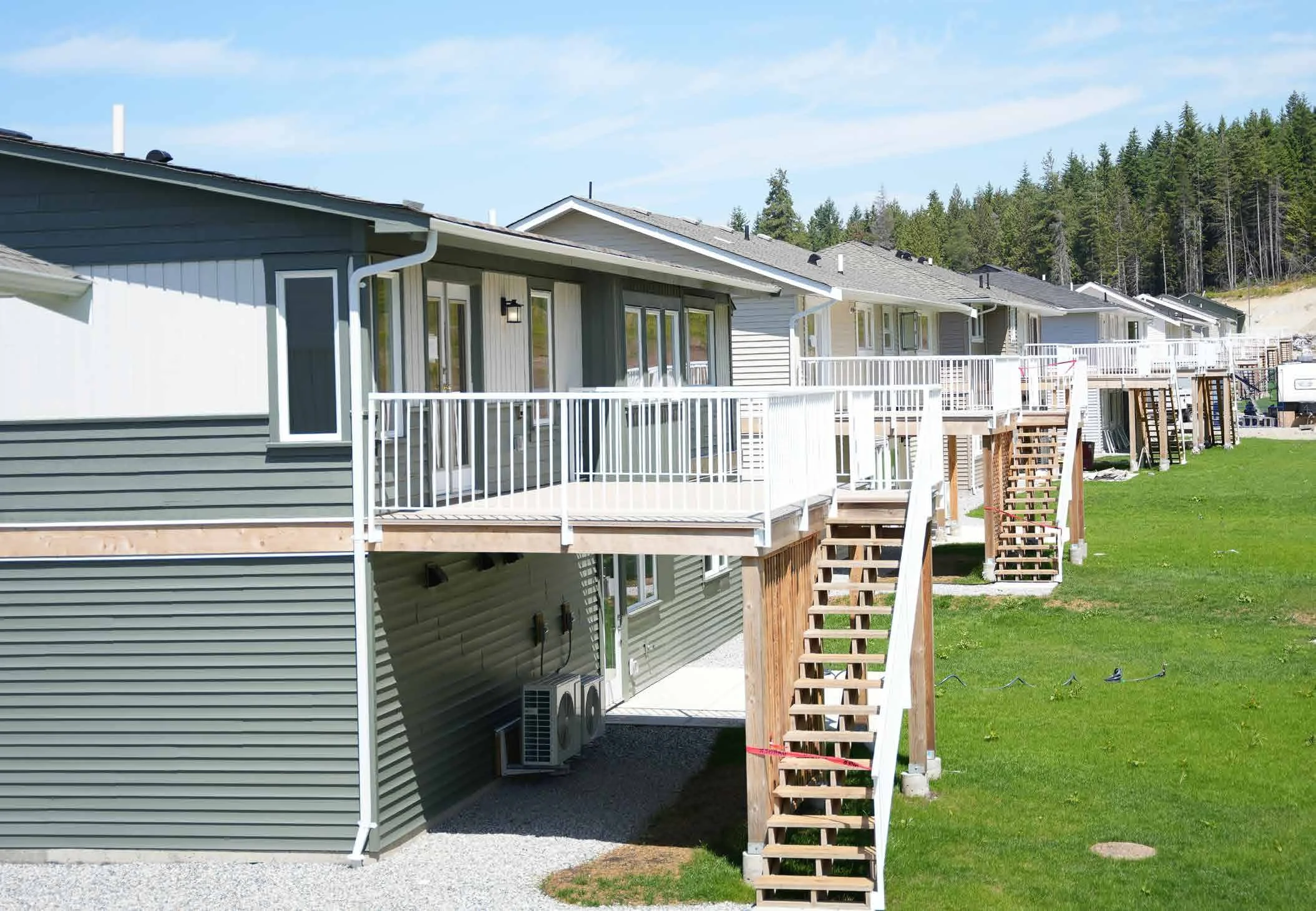
Relocated and modernized homes on shíshálh Nation lands in Sechelt — ten homes moved from Port Moody in 2024, among the projects behind the report’s cost benchmarks.
Where the friction is
The study is clear that the model works, and equally clear about what slows it down. Twenty-one structural moving companies operate across the seven cities, and no city has more than four. Permit timelines run from one to two weeks in Toronto, Vancouver and Ottawa to 7-16 weeks in Calgary — long enough for a developer to have demolished the house while waiting. Tree bylaws, utility protocols, escort requirements and shrinking move corridors add cost in every city. In Edmonton, according to the movers interviewed, tree trimming for a house move is effectively not permitted at all.
Policy is fragmented across three levels of government, and nowhere does it actively prefer relocation over demolition. Some measures help: refundable demolition deposits and variable tipping fees in Vancouver and Victoria, and tax treatment that benefits homeowners who sell or donate a home for relocation. But the report notes that the provincial push for faster approvals can treat any relocation initiative as a delay, even where it would deliver housing and cut waste. These are the conditions we have been working to change in Metro Vancouver alongside the BC Relocation and Deconstruction Association. The report gives that work a national frame.
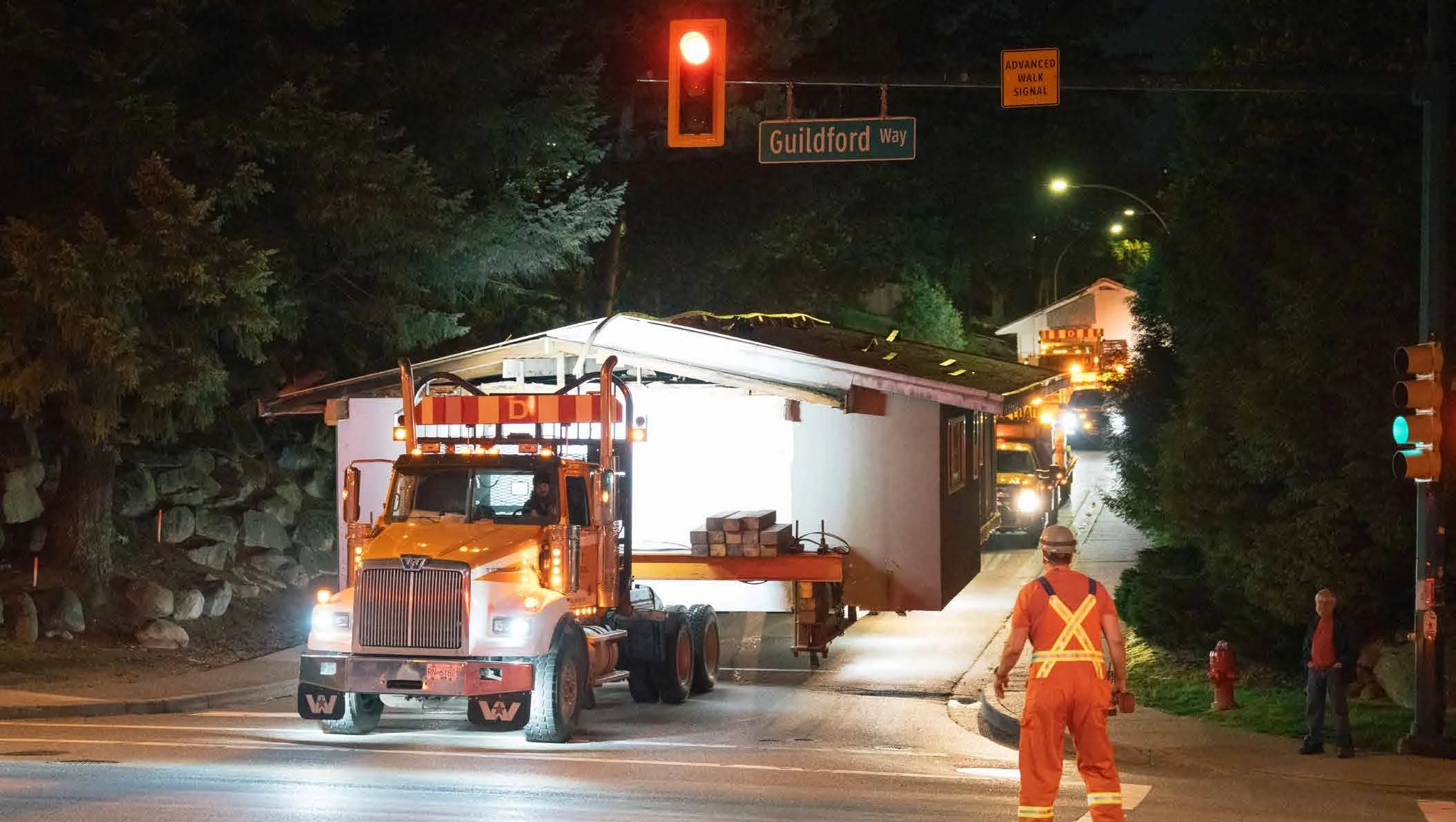
A rescued home leaving Port Moody by truck. Move corridors, permits and utility coordination are where the report finds most of the cost and delay.
What it changes
Every completed project makes the next one easier to point at. This report gives us something to point at beyond British Columbia. A developer in Toronto, or a housing manager for a Nation outside Edmonton, now has a federally funded, publicly available study that says the model is feasible in their city, counts the homes leaving their market, and costs relocation against new construction using our real project numbers. The demolition of high-value homes has always been a failure of precedent rather than a failure of engineering. The precedent is now documented in seven cities at once.
The report’s own closing line makes the point better than we could: “one of the best housing opportunities is a home that has already been built.”
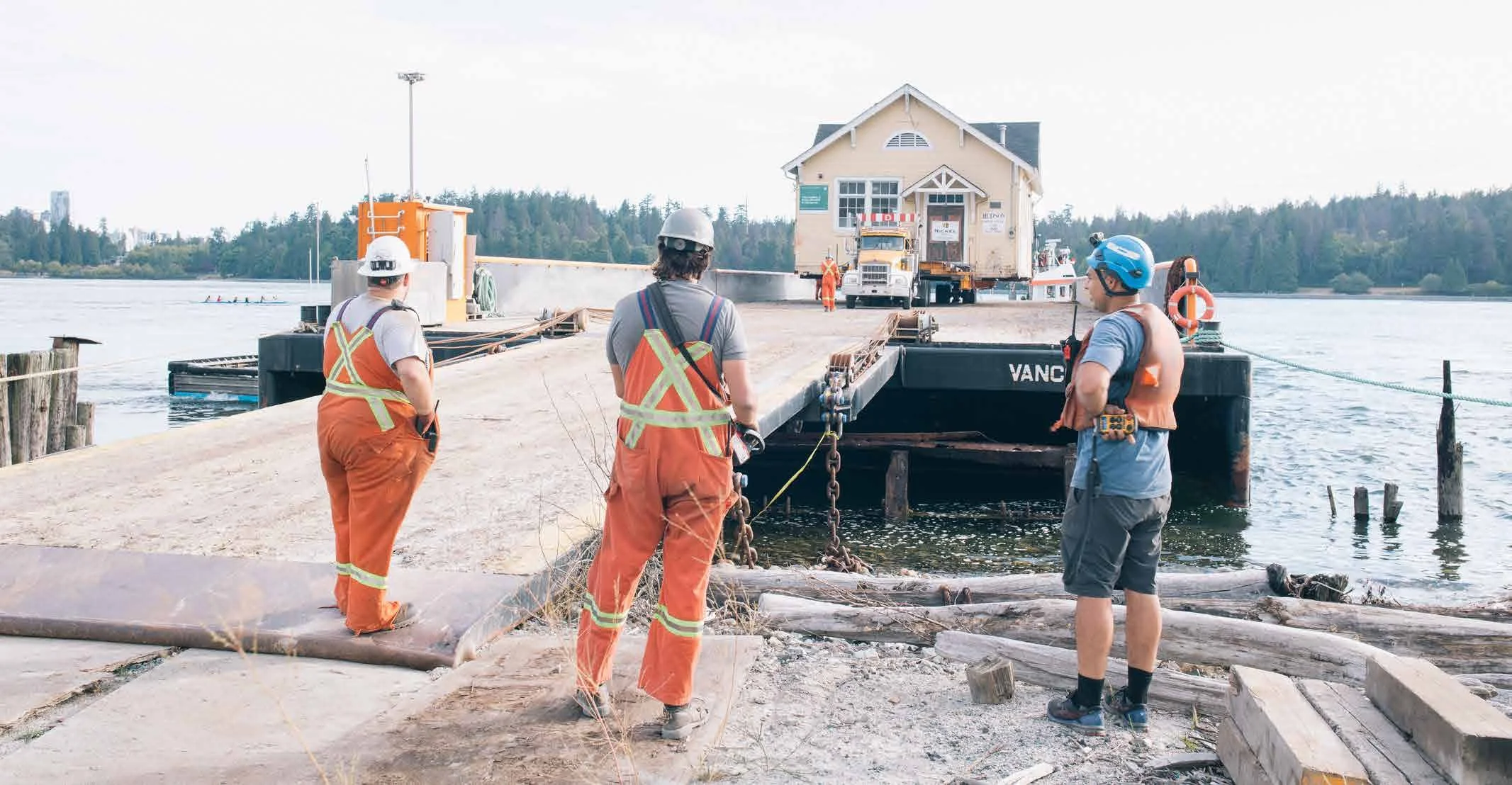
The Henry Hudson Elementary schoolhouse crossing to Squamish Nation by barge — a building that was headed for demolition, given a second life.
We are grateful to Light House Sustainability Society — Gil Yaron, Molly Coulter and Shijie Wang — for inviting us into the work and for the rigour they brought to it; to the Government of Canada’s Research and Knowledge Initiative for funding it; to shíshálh Nation, Sts’ailes Nation, ʼNa̱mǥis Nation and Squamish Nation for the leadership that produced the projects it studies; to the Nation trades and contractors who built alongside us; and to the developer partners who chose relocation over the default.
If you’re a developer with homes slated for demolition — in Metro Vancouver or in any of the six other cities this report covers — or a community looking for housing that can be delivered faster and for less, get in touch. We’d like to make relocation the ordinary outcome rather than the exception, and the evidence is now on the table.
Read the full report: A Second Life for Canada’s Homes (Light House Sustainability Society, May 2026)