
Beyond Demolition: BRDABC Releases Its Municipal Action Plan 2026

Ten high-value homes from Port Moody cross the water by barge to their new community for the shíshálh Nation.
This month the Building Relocation and Deconstruction Association of BC (BRDABC) released its Municipal Action Plan 2026, Beyond Demolition. It updates the 2025 plan into a 16-page framework any BC municipality can adopt: seven proven policies, four new ones, the places each one already works, templates to borrow and a model council motion. Renewal Development is a proud member of BRDABC, and our founder Glyn Lewis chairs the association.
The timing matters. Metro Vancouver approves the demolition of more than 2,700 homes a year, and that number is rising past 3,600 as multiplex zoning speeds up redevelopment. Industry estimates suggest about one in five of those homes could be moved and lived in again, and most of the rest taken apart for reuse. That is roughly 540 high-value homes a year in Metro Vancouver alone that could become housing for communities that need it, instead of landfill.
What the plan asks councils to do
The plan puts relocation first, deconstruction second and demolition last. Its seven recommendations start with a free Responsible Building Removal Assessment before every demolition permit, so good homes are flagged before the machines arrive. They add a refundable deposit that comes back when a home is relocated or its materials are salvaged, early green removal permits, a density bonus or fee relief, a clear definition of deconstruction, and a call to treat building removal as economic development rather than waste management.
Councils are also asked to lead with their own buildings, putting relocation first when they clear City-owned land. Four additions are new for 2026: phase in requirements by building age, build local capacity first, measure and publish results, and welcome moved homes on their new sites on the same terms as new homes.
Every recommendation is already working somewhere
At Renewal Development, the question we hear most from councils is simple: has anyone done this? The answer is yes, and the plan links to the bylaws, tenders and programs behind each example.
About 260 homes relocated in three years by Kāinga Ora, New Zealand’s public housing agency
765 buildings deconstructed in Portland since its requirement took effect in 2016
7 of 9 projects met Victoria’s salvage target once its $19,500 deposit was paid up front, up from 2 of 11
35% of the score goes to the clearing method in Burnaby’s 2026 site clearing tender, and only 20% to price
20–40% lower cost for a relocated home compared with building new
Closer to home, the City of Burnaby stopped defaulting to demolition in 2026 for the roughly 120 houses it owns. Its new site clearing contracts invite relocation, deconstruction or demolition, and score how a site will be cleared above price. Because it works through procurement, any municipality can match it in its next tender. We wrote about how New Zealand and Australia put relocation first in our recent journal post; this plan shows how BC can do the same.
Why this matters to Renewal Development
Renewal Development rescues high-value, well-renovated and well-maintained homes slated for demolition and moves them to communities that need housing, often with First Nations partners. On every project, the Nation directs and Renewal Development leads delivery. We moved ten homes from Port Moody by barge for the shíshálh Nation, and in September we sent three Coquitlam homes to Old Massett on Haida Gwaii, where they are becoming nine units of housing.
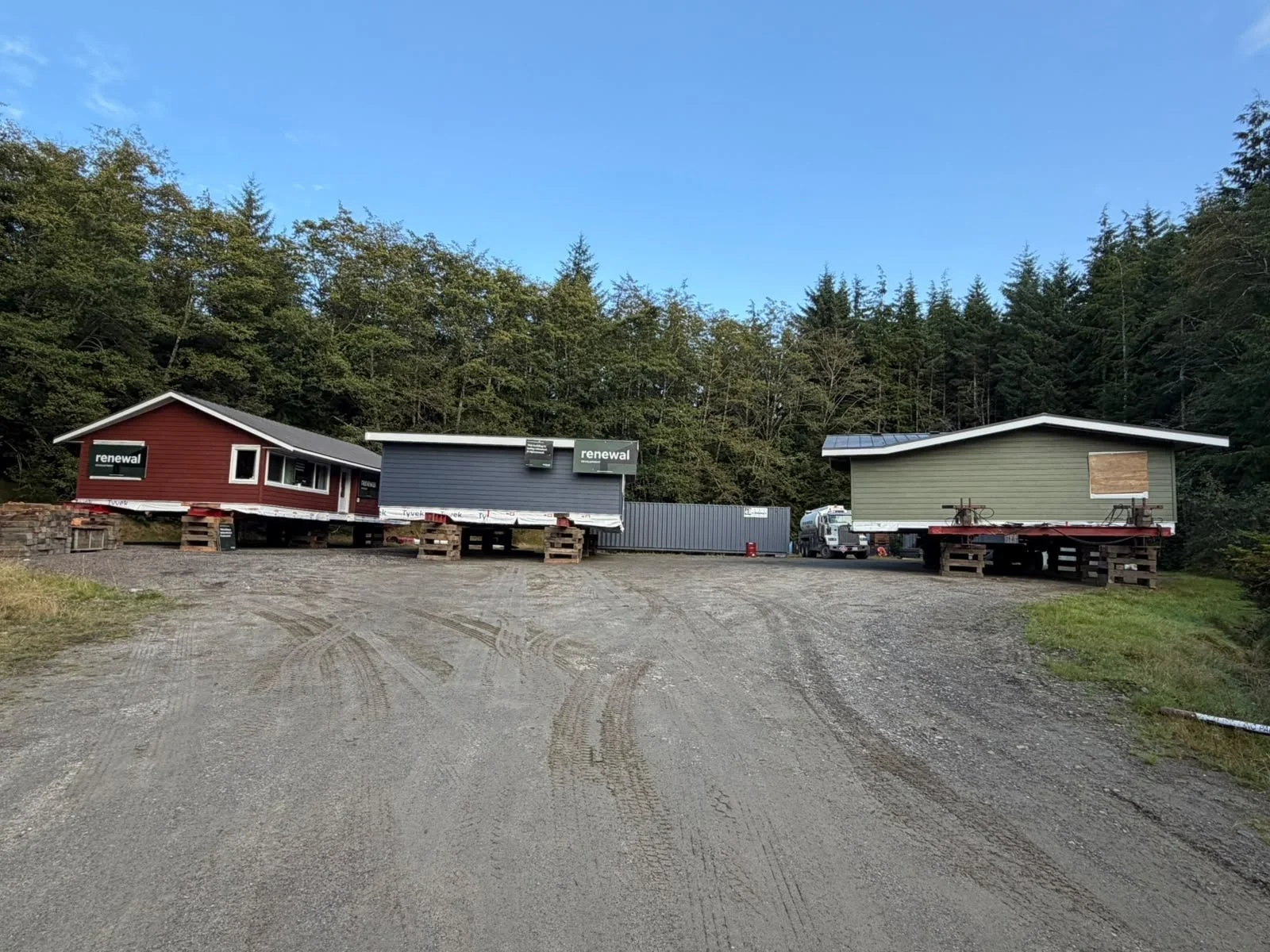
Three rescued Coquitlam homes staged for their new foundations in Old Massett, Haida Gwaii, 2026.
We have also seen good homes lost simply because no one knew they were coming down until it was too late. The plan’s first recommendation, a free assessment before every demolition permit, closes that gap. It costs the applicant nothing, and BRDABC members aim to respond within three to five business days.
How a council can start
The plan sets out three stages. Within six months, a council can adopt standard definitions, a relocation-first standard for City-owned buildings and annual reporting, using powers it already has and with no new fees. Within a year, it can add the assessment, early green removal permits and a refundable deposit. Within two years, it can add density incentives and a phased requirement for older homes. A model council motion directs staff to report back within 90 days.
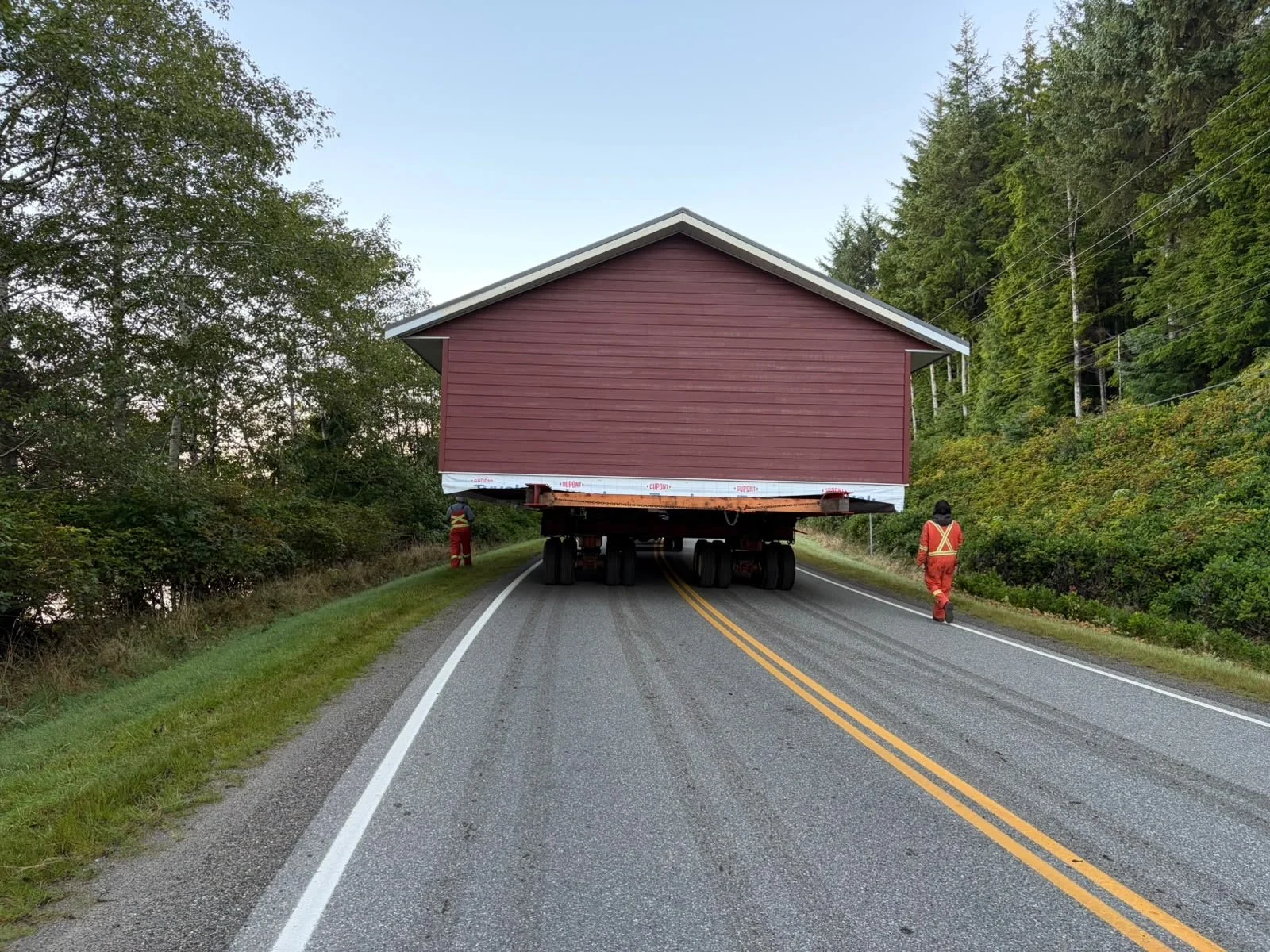
A rescued Coquitlam home on its way to Old Massett, Haida Gwaii, 2026.
We are grateful to the BRDABC members, municipal staff and Nation partners whose work fills these pages, and to the City of Burnaby staff whose site clearing reform shows what thoughtful procurement can do.
Councillors and staff: read the full plan at brdabc.ca/advocacy, and reach out to BRDABC for help adapting any recommendation. Developers with homes slated for demolition, and communities looking for high-quality housing: get in touch with Renewal Development.