
Moving a Town: How Kiruna, Sweden Rolled Its 672-Tonne Church to a New Home
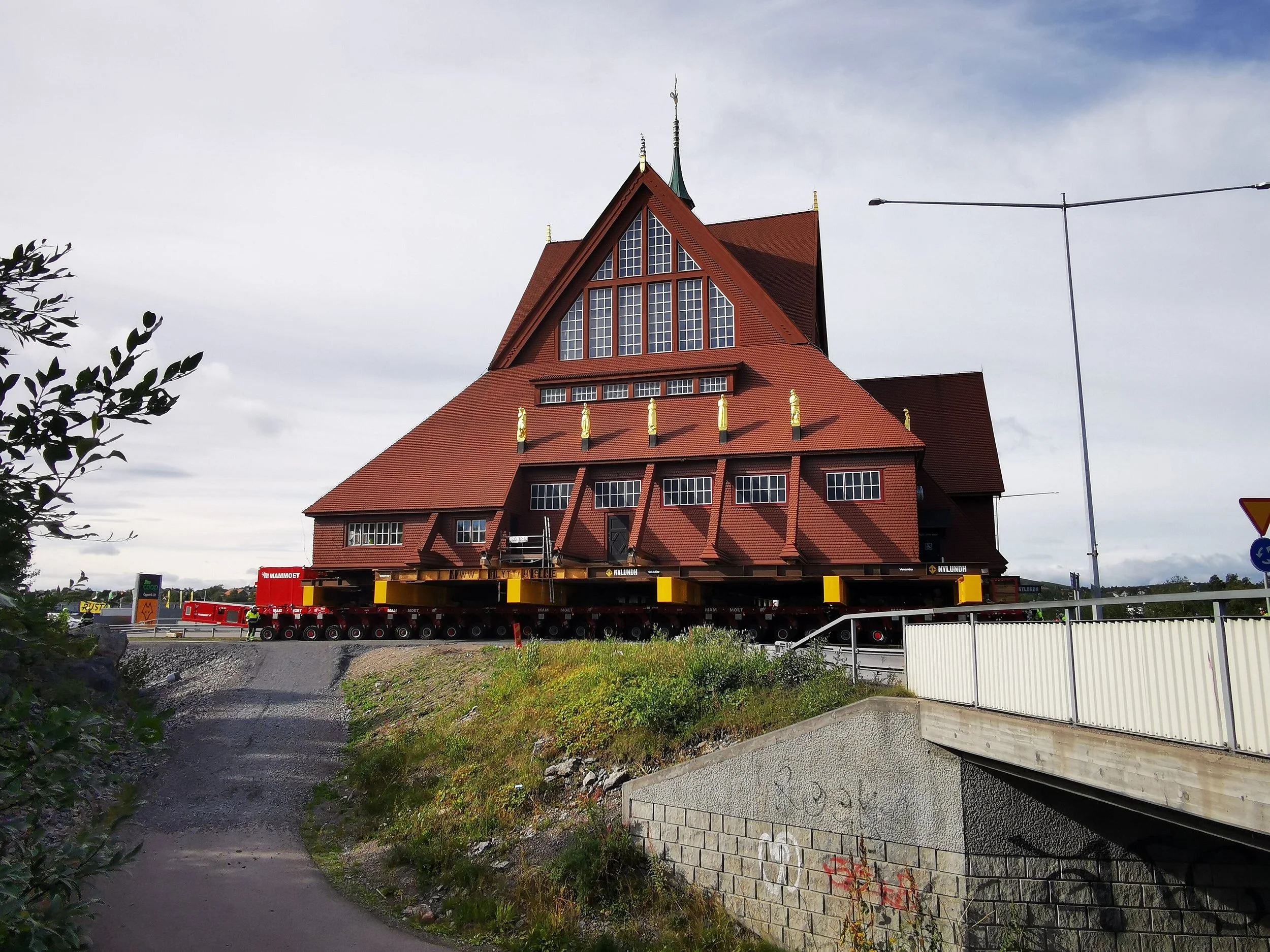
Kiruna Church on its way to a new site in Kiruna, Sweden, on August 19, 2025. Photo: TorbjørnS, CC BY 4.0, via Wikimedia Commons.
In August 2025, the town of Kiruna in Arctic Sweden moved its church. The whole building — 672 tonnes of timber, 40 metres wide — rolled five kilometres on two trains of self-propelled transporters to a new site beside the town’s new centre. Thousands of people lined the route. It took two days.
At Renewal Development we follow moves like this closely. Kiruna isn’t a heritage stunt. It’s a public owner facing the loss of a whole neighbourhood and deciding, early, that the buildings worth keeping would be moved rather than demolished. That’s the decision we want to see made in BC every time good homes are in the way.
Why a whole town is moving
Kiruna sits on top of the iron ore mine run by LKAB, Sweden’s state-owned mining company. As the mine goes deeper, the ground under the old centre shifts. About 6,000 people and roughly 3,000 homes are affected, along with about 450,000 square metres of public and commercial space. A new city centre is growing about three kilometres east, and the old centre is to be phased out by 2035.
The municipality said it plainly back in 2004: “We’re moving a town.” Planning for the church move began more than 20 years ago.
Assess first, then decide
Not everything moves. LKAB has agreed to move 39 or more culturally historic buildings out of the affected area — workers’ housing, the old fire station, the engineers’ villa, the old cottage hospital and the home of the town’s founder, Hjalmar Lundbohm, among them. Before anything happens, each building is studied: a conservator reviews the drawings and details, its history is traced, and an ethnologist records who lived there and what happened inside. In the affected area, a demolition permit can only be issued once that documentation is done.
The houses came first. Under a SEK 240 million contract, LKAB and the contractor Veidekke moved and restored 12 culturally valuable wooden buildings in two stages, including architect Gustaf Wickman’s “Yellow Row” and four 16-room workers’ homes. The first move was completed in October 2019.
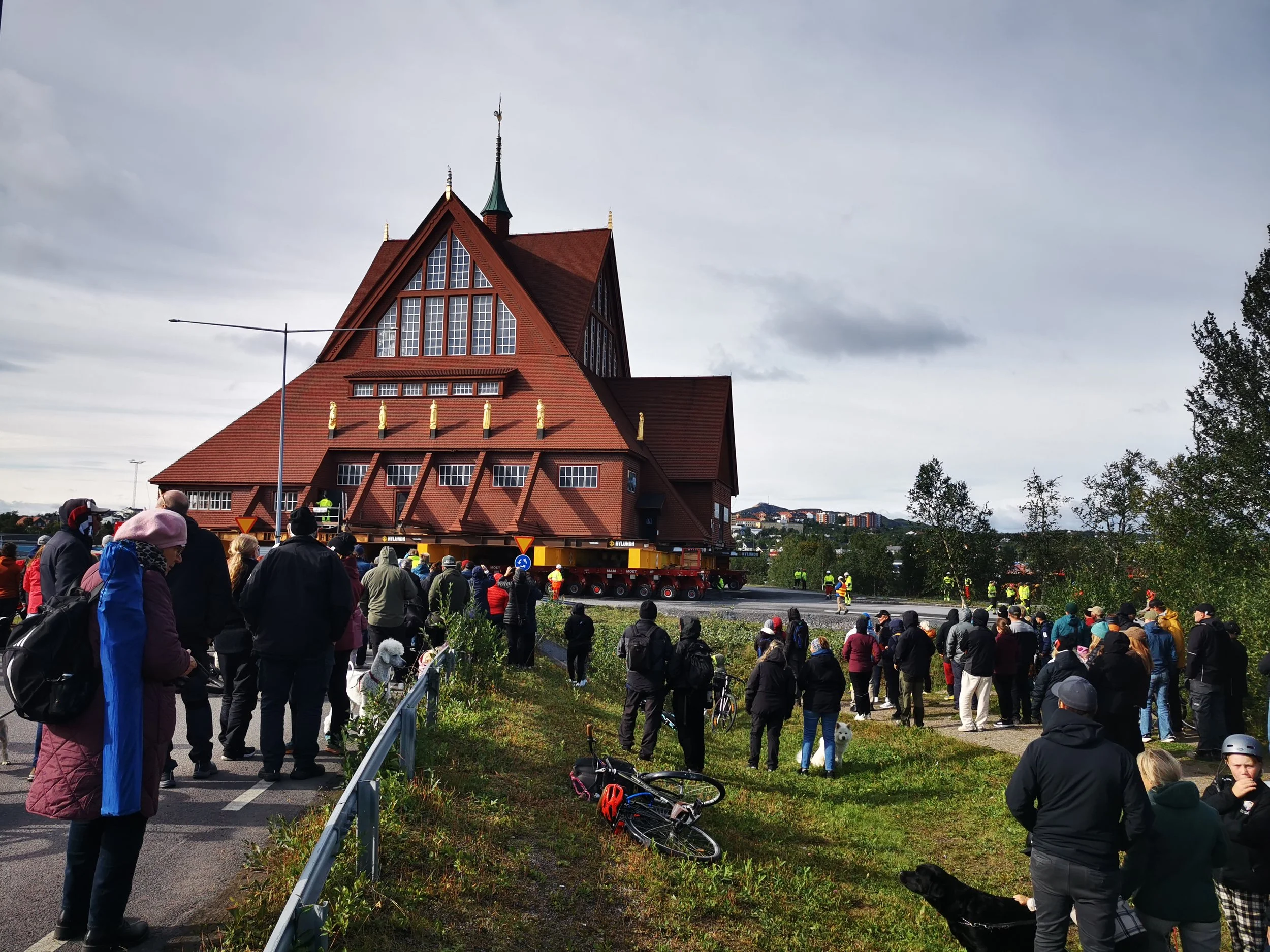
Crowds follow Kiruna Church along its five-kilometre route, August 19, 2025. Photo: TorbjørnS, CC BY 4.0, via Wikimedia Commons.
The order matters: assess, then decide. Renewal Development works the same way. We assess every home before it’s offered for relocation — exterior, interior, mechanical, moisture and structure, backed by third-party inspection — and only about one in five makes the cut. The ones that do are high-value homes, well renovated and well maintained, with decades of service left in them.
The church: 1,000 hours of planning for two days of moving
Kiruna Church was built between 1909 and 1912 to designs by Gustaf Wickman, a gift from LKAB to the parish. It’s perhaps the town’s most characteristic building, and it’s protected cultural heritage.
The heavy-transport firm Mammoet, working for LKAB and Veidekke, spent more than 1,000 hours planning the move. The team modelled how the timber structure would respond, tested the route with transporters loaded with counterweights, and widened and compacted the roads. The church was jacked up 1.3 metres onto steel beams and monitored the whole way so it never tilted more than 75 millimetres from one side to the other. It arrived turned 180 degrees, with its altar now facing west.
“The church has finally found its new home,” said Lena Tjärnberg, vicar of the Kiruna parish.
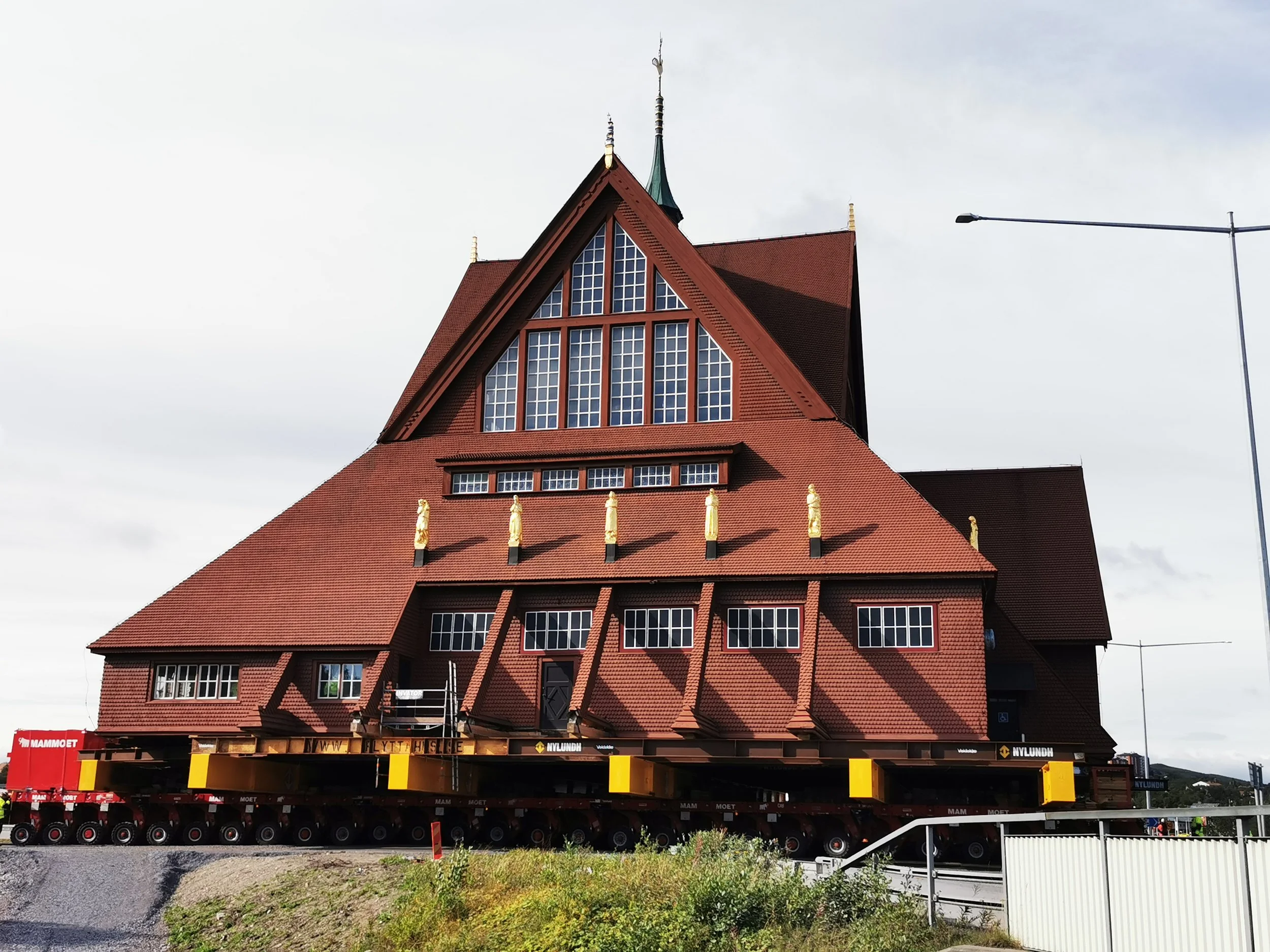
Kiruna Church, jacked 1.3 metres onto steel beams and riding on self-propelled transporters, August 19, 2025. Photo: TorbjørnS, CC BY 4.0, via Wikimedia Commons.
What the numbers show
672 tonnes — Kiruna Church, moved in one piece
5 km — mostly on public roads, over two days in August 2025
1,000+ hours — of planning behind the move
39+ buildings — of cultural value that LKAB has agreed to move
12 wooden buildings — moved and restored under one SEK 240 million contract
What this means for BC
A house is far simpler than a church. Moving homes is everyday work for our Renewal Team. In September we delivered three good homes from Coquitlam to Old Massett on Haida Gwaii, by road and by barge, where they’re becoming nine units of rental housing. The engineering isn’t what holds BC back. The decision is.
Kiruna shows what a public owner can do. Decide early. Document every building before a demolition permit is issued. And treat moving the good ones as part of the project, not an afterthought. In BC, ministries, transit agencies, utilities and cities clear land with good homes on it every year. Each of those homes could be assessed for relocation before it’s demolished. Renewal Development’s Municipal Action Plan asks for exactly that.
Much appreciation to LKAB, the Municipality of Kiruna, the Kiruna parish and Mammoet for sharing the details of this move openly, and to photographer TorbjørnS for publishing his photos of the day under an open licence.
If you manage land with homes slated for removal — a ministry, a Crown agency, a transit authority, a city or a developer — get in touch with Renewal Development. Relocation first can be the ordinary outcome here too. Many more to come.