
Rethinking Demolition: Scaling Building Relocation through Partnerships & Local Government Policy Change
Every year, on average, 2,700 single family homes are torn down across Metro Vancouver (Canada) to make space for higher-density development. Renewal Development estimates about 700 of these homes are in good condition and are good candidates for relocation and repurposing [1]. While urban densification addresses the critical shortage of housing, it is also important to remember that it destroys hundreds of homes that could (and should) be relocated and repurposed from growing urban areas to non-urban communities in need of good, cost-effective, climate-resilient housing. The number of homes slated for demolition is projected to increase by 35% over the next ten years as blanket upzoning policies encourage homeowners and developers to tear down tens of thousands of homes to create higher density [1].
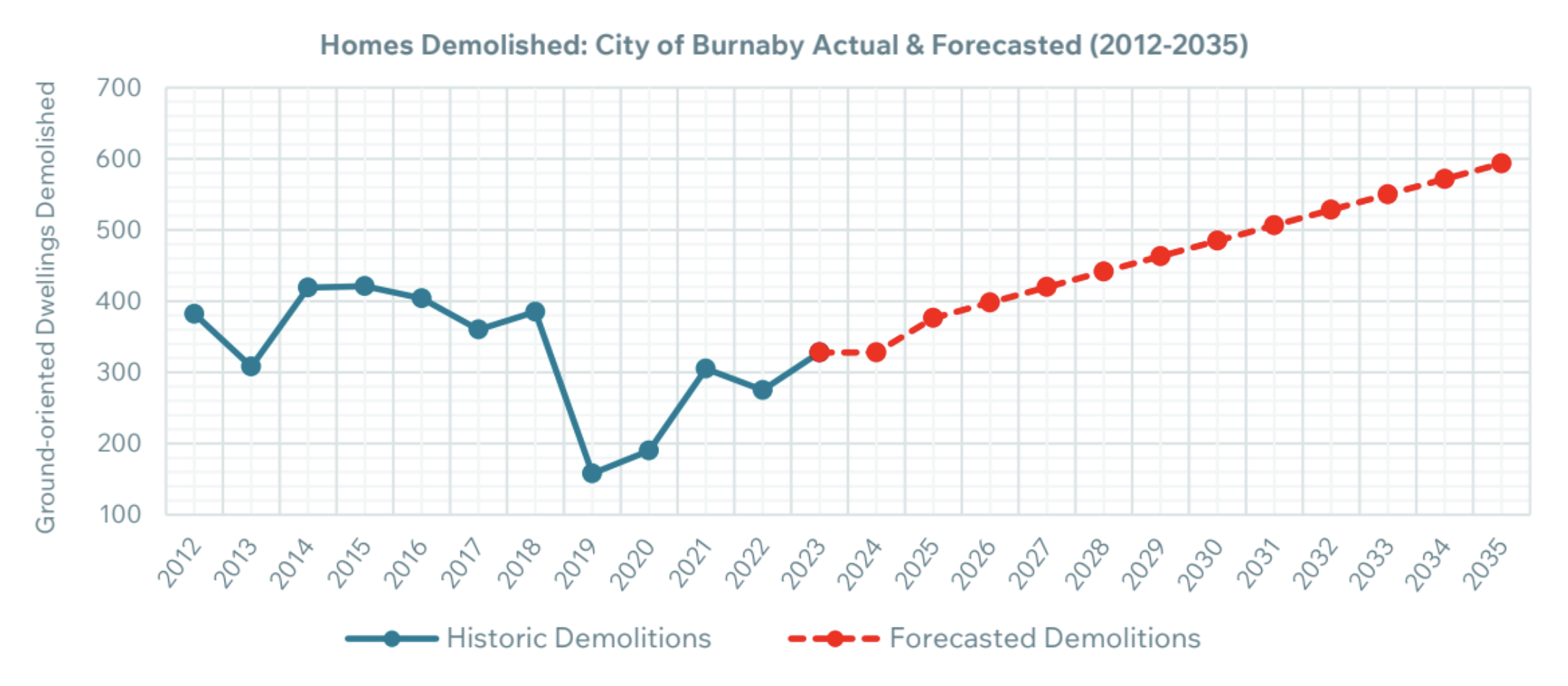
The average 1,500 sq ft wood-framed home sent to the landfill results in the loss of an estimated 23 tonnes of embodied carbon and 60 to 100 tonnes of waste (per 1500 square-foot wood-framed home). Annually, this translates to over 280 million kilograms of material waste and hundreds of tonnes of avoidable carbon emissions [2].
The urban demolition crisis is not just about losing buildings; it also means losing valuable materials, cultural heritage, environmental value, and the chance to create sustainable solutions.
The Gap in the Industry
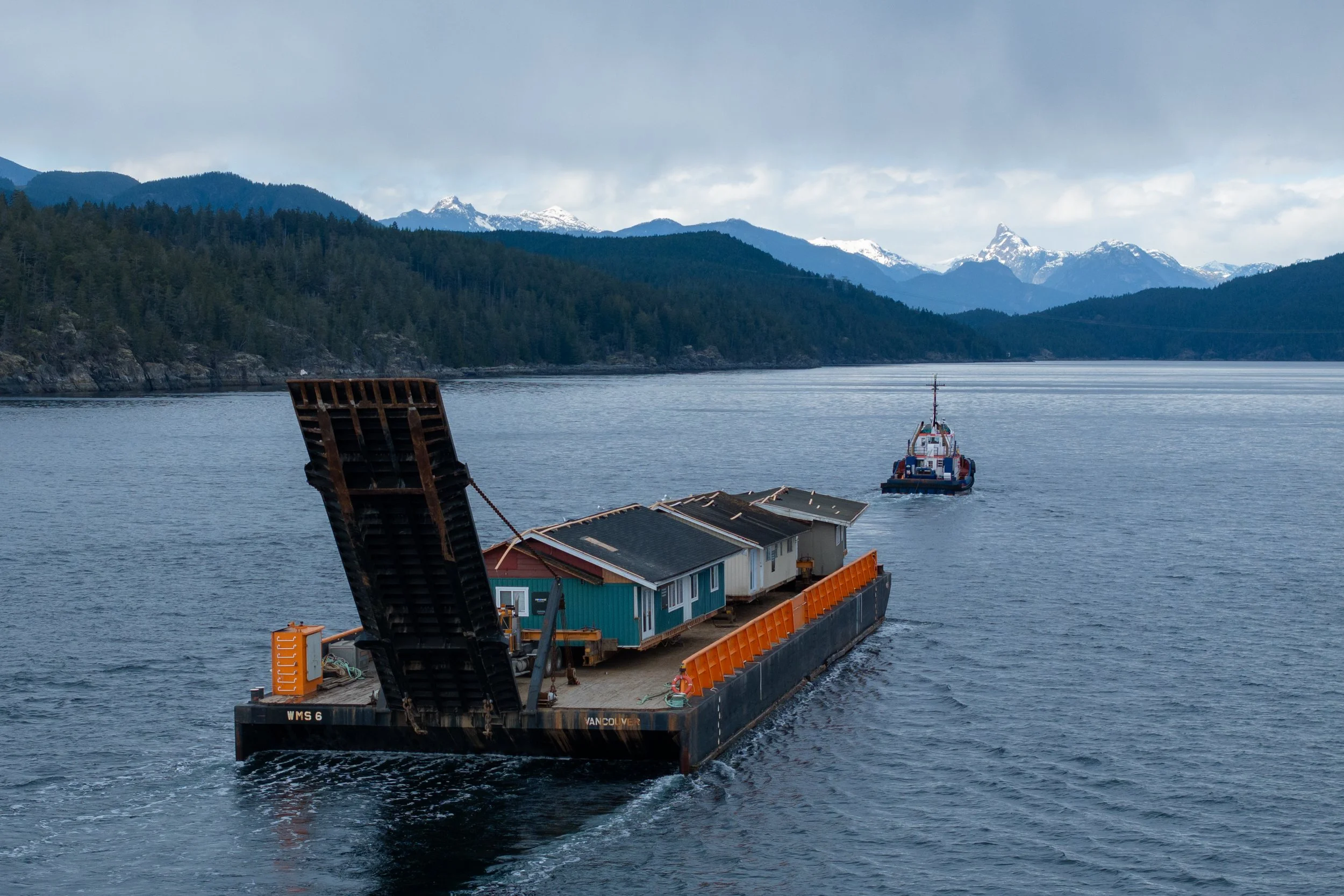
Despite the demand for cost-effective, climate-resilient housing along the coast of British Columbia, the current building relocation industry here in the Pacific Northwest is relatively small and fragmented. Only a handful of companies actively relocate homes, leaving a significant gap between the number of viable homes being demolished and the number rescued. Much of this is due to inefficiencies in the current building relocation service provision models, as well as a “demolition first” mindset by the real-estate development industry.
This is where Renewal Development has stepped in. Our approach is more than a service; it is a solution. We rescue, relocate, retrofit, and repurpose quality single-family homes from growing urban areas to non-urban and underserved communities, particularly Indigenous Nations in coastal regions. Every home Renewal saves is modernized. These homes are retrofitted, emitting up to 9.6 tonnes (24.1%) less total carbon emissions (i.e., embodied and operational) than an equivalent newly constructed Step Code 3 building over a 60-year lifespan [3].
Our work demonstrates that home relocation and repurposing are possible and scalable, as showcased through our successful collaborations. In several projects partnered with the shíshálh, Sts’ailes, and Squamish Nations, Renewal Development rescued and relocated 15 homes, preserving materials, reducing carbon, and delivering affordable, climate-resilient housing to coastal communities in need.
Policy and Industry Leadership
Saving and relocating homes is only part of our solution; scaling requires municipal policies that keep pace with industry innovation and prevent demolition in the first place. Many municipalities still treat demolition as the default option, even when homes are structurally sound. To scale relocation meaningfully, local governments need clear policy tools that prioritize responsible building removal over wasteful teardown practices.
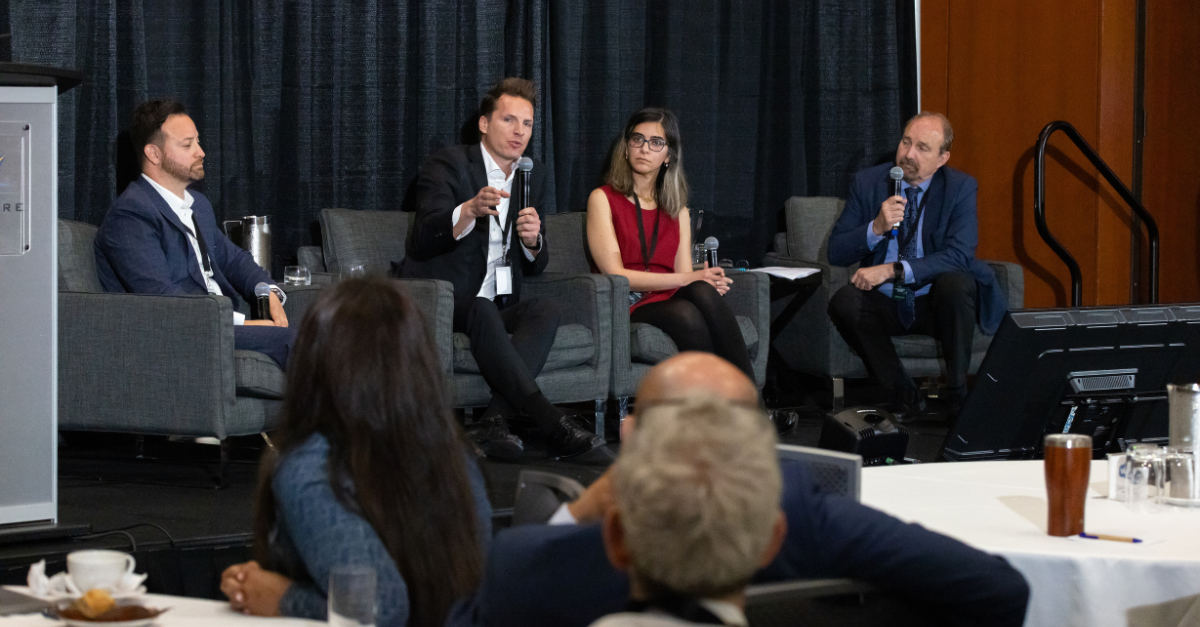
Renewal’s impact comes from pairing our solution-driven operations with bold policy leadership to shift this entrenched demolition-first culture. In June 2025, Renewal Development co-founded the Building Relocation and Deconstruction Association of British Columbia (BRDA). Following its launch, BRDA is shifting into implementation by supporting municipalities, builders, and policymakers as they adopt stronger standards for responsible removal.
BRDA’s Municipal Action Plan outlines practical steps municipalities can adopt today to reduce demolition waste and promote circular housing solutions. The seven-point framework includes:
Responsible Building Removal Assessments for all homes slated for demolition.
Refundable Demolition Deposits to incentivize relocation or deconstruction.
Early Green Removal Permits to allow homes to be responsibly removed before construction permits are issued.
Density Bonuses for developments that relocate or fully deconstruct homes.
Municipal Procurement Standards prioritizing responsible removal in city projects.
Standardized Definition of ‘Deconstruction’ to ensure consistency across municipalities.
Framing Policy as ‘Responsible Building Removal’, rather than demolition or recycling, to emphasize the economic and environmental value of homes.
Through these initiatives, Renewal Development and BRDA aim to shift municipal policy and local perception to make demolition a last resort, rather than the default.
A Vision for the Future
Renewal Development is leading a new vision for housing. One where homes are valued, not wasted; where affordable, low-carbon housing is the standard; and where policy supports solutions, not demolition. Through operational innovation, collaboration, and advocacy, we’ve created a scalable, socially impactful model for home relocation.
By adopting this paradigm, Metro Vancouver can divert hundreds of thousands of tonnes of building materials from landfill, deliver much‑needed affordable housing, and stimulate local economic activity. The carbon emissions mitigated through Renewal’s model support the region’s commitment to a 45% reduction in GHG emissions by 2030 (relative to 2010 levels) under its Climate 2050 roadmap.
As we continue to scale our model and advocate for change, the message is clear: the era of demolition-first is over. Homes can be saved, relocated, and repurposed for communities that need them most. Together with BRDA, municipal partners, and industry peers, we are leading a paradigm shift in building relocation, sustainability, circularity, and housing innovation, one home at a time.
References
Municipal Action Plan (Metro Vancouver 2025). (2025). Home demolition waste prevention: Municipal action plan – Metro Vancouver version. Light House / Renewal Development. [Link].
Renewal Development. Advocacy. Retrieved November 18, 2025. [Link].
Light House. (2024). Comparative life cycle assessment of the Relocation and Retrofit of Henry Hudson Elementary School. [Link].